About 417 minutes
Hell's Hatches — Edition Insights
Classic Adventures
95,728 recorded words. 4 minutes difference from this book's estimate.
View Gutenberg source #44632
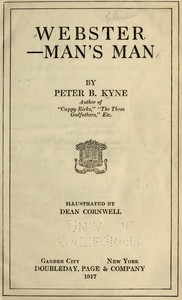
Before opening Webster—Man's Man — Themes and Context, the edition data offers a quick orientation: 96,764 words, 7 hr 1 min estimated reading time, and 11 detected text sections.
The text analysis averages about 18.0 words per sentence, while the detected sections provide another way to judge how the source is divided.
Project Gutenberg metadata also associates the work with “Love stories,” connecting these edition facts with the source record’s subject description.
Explore this collection
These alternatives are selected using recorded categories and estimated reading time.
About 417 minutes
Classic Adventures
95,728 recorded words. 4 minutes difference from this book's estimate.
View Gutenberg source #44632About 408 minutes
Classic Adventures
93,726 recorded words. 13 minutes difference from this book's estimate.
View Gutenberg source #9927About 434 minutes
Classic Adventures
99,615 recorded words. 13 minutes difference from this book's estimate.
View Gutenberg source #62907Search stored excerpts and compare books → Choose by your preferences →
Choices use stored catalog measurements. Estimates vary with reading speed. A shared category is a catalog label, not a claim that two books have the same argument or literary quality.
Search reads excerpt text stored with this catalog and links to its associated Gutenberg record. The connection is stored in the site database; this tool does not recheck that every excerpt is word-for-word identical to that external record. Excerpt search does not cover every chapter and does not verify historical publication dates.
Catalog snapshot checked: 2026-09-26. Coverage: 100 public books, 100 available source excerpts.
Calculated from edition completeness, EPUB availability, text structure and catalogue metadata. Not a user rating.
Total of 100 points, scaled to a 2.5-5.0 range. Editions with an empty description or a missing EPUB file are not scored.
Public-domain source text
The source text is kept in the dedicated reader, separate from this catalogue record and its commentary.
Peter B. Kyne's Webster—Man's Man opens not with a revolution or a love interest but with John Stuart Webster, a mining engineer, flagging down a train in Death Valley. His first thoughts are of ham and eggs, cigars, and a new suit—a mundane list that immediately establishes a voice both wry and concrete. The catalog subjects list 'Revolutions' and 'Man-woman relationships,' yet the excerpts show Webster more concerned with a drunkard's self-respect than with romance or political upheaval. This note traces how the novel's early chapters foreground character and moral authority over the adventure promised by its metadata.
The first chapter devotes several paragraphs to Webster's plan for a 'debauch' of ham and eggs, cigars, and a ready-to-wear suit. This inventory is not mere scene-setting; it reveals a man who values order and reward. Kyne writes that Webster 'had definitely resolved to do certain things,' and the list that follows is precise: twenty dollars' worth of ham and eggs, nicotine from tobacco 'with nicotine in it,' and a suit he will later donate to a prospector. The voice is knowing, almost conspiratorial, as when the narrator notes that 'the August temperature in Death Valley is no respecter of moisture in any man or his tobacco.' This opening establishes a protagonist who plans his pleasures as carefully as his work, and who measures civilization by its small comforts.
Webster's authority is conveyed not through declarations but through physical detail. When he encounters Don Juan Cafetéro, a drunkard, Webster puts 'a big forefinger under your chin and bade you hold up your head.' The gesture is repeated in Dolores's memory, and it defines Webster more than any speech. Later, Cafetéro returns a five-dollar piece, sober but shaking, and Webster responds with a measured prescription: 'a large jolt of aguardiente' to steady his nerves, then three more drinks spaced through the day. The catalog subject 'Man-woman relationships' appears in Dolores's observation of Webster—'A doer of deeds are you'—but the excerpt focuses on her watching him handle a broken man. The romance is deferred; the moral test is immediate.
Kyne's narrator adopts a colloquial, knowing tone that matches Webster's own. Phrases like 'kicker-up-of-dust on distant trails' and 'the pinnacle of epicurean delight' mix slang with mock-formality. The dialogue is marked by dialect: Cafetéro speaks in a stage-Irish brogue ('Shure, Misther Geary do be the fine lad'), while Dolores quotes Kipling. Webster himself speaks plainly, giving orders without explanation. This voice—confident, slightly sardonic, grounded in physical detail—carries the early chapters. The catalog subject 'Adventure stories' suggests action, but the excerpts offer a different kind of adventure: the management of a man's own appetites and another man's weakness. The revolution and love story remain offstage, hinted at only by Dolores's whispered line and the mention of a missing Mr. Geary.
The excerpts from Webster—Man's Man suggest a novel more interested in character and moral economy than in the revolutions or romances its catalog subjects promise. Readers expecting swift action may find instead a deliberate, almost procedural attention to how a man earns trust and gives orders. The opening chapters reward patience with a voice that is both specific and dryly humorous. Those who enjoy Kyne's later work—Cappy Ricks or The Three Godfathers—will recognize his method: a hero defined by small, telling choices rather than grand gestures.
Reading about Webster’s deliberate voice and unhurried character made me strangely homesick for another woods-bound man. There is a similar patience in how Tom Akerley His Adventures in the Tall Timber and at Gaspard's Clearing on the Indian River — A Closer Reading lingers on a man’s quiet competence rather than rushing him along. Both feel like sitting on a porch, listening to the creak of a chair.
A brief reflection can help important ideas stay with you longer.