About 306 minutes
Tarzan and the city of gold — Themes and Context
Classic Adventures
70,318 recorded words. 0 minutes difference from this book's estimate.
View Gutenberg source #71316
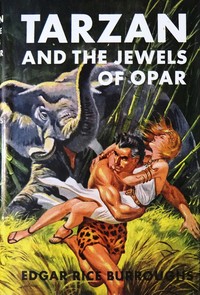
Tarzan and the Jewels of Opar — Inside the Classic can be approached with a clearer sense of reading commitment from its source measurements: 70,378 words, 5 hr 6 min estimated reading time, and 25 detected text sections.
The text analysis averages about 21.8 words per sentence, while the detected sections provide another way to judge how the source is divided.
Project Gutenberg metadata also associates the work with “Tarzan (Fictitious character) -- Fiction,” connecting these edition facts with the source record’s subject description.
Explore this collection
These alternatives are selected using recorded categories and estimated reading time.
About 306 minutes
Classic Adventures
70,318 recorded words. 0 minutes difference from this book's estimate.
View Gutenberg source #71316About 308 minutes
Classic Adventures
70,701 recorded words. 2 minutes difference from this book's estimate.
View Gutenberg source #65459About 303 minutes
Classic Adventures
69,534 recorded words. 3 minutes difference from this book's estimate.
View Gutenberg source #25316Search stored excerpts and compare books → Choose by your preferences →
Choices use stored catalog measurements. Estimates vary with reading speed. A shared category is a catalog label, not a claim that two books have the same argument or literary quality.
Search reads excerpt text stored with this catalog and links to its associated Gutenberg record. The connection is stored in the site database; this tool does not recheck that every excerpt is word-for-word identical to that external record. Excerpt search does not cover every chapter and does not verify historical publication dates.
Catalog snapshot checked: 2026-09-26. Coverage: 100 public books, 100 available source excerpts.
Calculated from edition completeness, EPUB availability, text structure and catalogue metadata. Not a user rating.
Total of 100 points, scaled to a 2.5-5.0 range. Editions with an empty description or a missing EPUB file are not scored.
Public-domain source text
The source text is kept in the dedicated reader, separate from this catalogue record and its commentary.
The catalog subjects for Tarzan and the Jewels of Opar list 'Tarzan (Fictitious character) -- Fiction' first, yet the opening chapter centers on Lieutenant Albert Werper, a Belgian officer brooding over his exile to a Congo post. The narrative dwells on his 'morbid self-pity' and growing hatred for his captain, culminating in a homicidal outburst. Tarzan does not appear until later, and the jewels of Opar are not mentioned in the excerpts provided. This discrepancy between catalog expectations and the actual text invites scrutiny of how the novel distributes its focus among multiple plot threads.
The first chapter introduces Werper as a man whose 'weak and vacillating mind' transforms gratitude into resentment. Burroughs devotes considerable space to Werper's internal state: he 'brooded continually over his fate' and 'regretted the gay life of Brussels.' The captain is described as 'cold, taciturn,' and Werper's hatred becomes 'a form of mania.' This psychological portrait occupies the opening pages, with no mention of Tarzan or jungle adventure. The catalog subject 'Adventure stories' might lead readers to expect immediate action, but the novel begins with a character study of moral decay in a colonial setting.
When Tarzan does appear, the excerpts show him in a hunting sequence: he torments a lion (Numa) from a tree, shooting arrows until the beast is paralyzed, then 'drove his spear deep into the fierce heart.' The scene emphasizes Tarzan's skill and his disappointment that the lion killed the man he sought to rob. The narrative then shifts to Mugambi, a black warrior searching for his mistress, and later to Abdul Mourak's Abyssinian soldiers. These multiple perspectives suggest a sprawling plot, but the catalog's 'Fantasy fiction' label is not strongly supported by the excerpts, which present realistic (if heightened) jungle dangers rather than supernatural elements.
The excerpts embed the story in colonial Africa: Werper is a Belgian officer in the Congo, and Arab raiders and Abyssinian soldiers appear. The catalog does not reflect this colonial framework. Werper's dishonor and his captain's authority evoke the tensions of imperial service. The narrative voice treats Werper's hatred as 'senseless,' yet the story follows his perspective closely. This moral ambiguity—where the 'hero' is absent and the initial viewpoint character is a flawed, potentially villainous figure—complicates the simple 'Adventure stories' classification. Readers expecting a straightforward Tarzan tale may find a more layered, morally complex narrative.
Readers approaching Tarzan and the Jewels of Opar should note that the catalog subjects do not fully capture the novel's structure. The opening chapters prioritize a disgraced Belgian officer's psychological decline over Tarzan's exploits. Pay attention to how Burroughs shifts perspectives among Werper, Tarzan, Mugambi, and others, and consider how the colonial setting shapes the characters' motivations. The jewels themselves remain absent from the excerpts, suggesting that the plot may unfold gradually.
Reading about the Belgian officer’s quiet unraveling in Tarzan and the Jewels of Opar, I kept thinking how duty can feel so heavy on a person. It reminded me, oddly, of the cheerful correspondence in The Outdoor Girls in Army Service; Or, Doing Their Bit for the Soldier Boys — Edition Insights. Both touch that strange space where old selves fade, and something else must step forward.
Build a private reading journal entry for this title.