About 267 minutes
Trusia: A Princess of Krovitch — Edition Insights
Classic Adventures
61,385 recorded words. 5 minutes difference from this book's estimate.
View Gutenberg source #31518
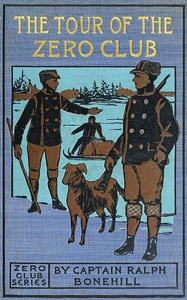
This digital edition of Tour of the Zero Club — A Closer Reading is described by source-level measurements including 62,449 words, 4 hr 32 min estimated reading time, and 41 detected text sections.
The text analysis averages about 13.4 words per sentence, while the detected sections provide another way to judge how the source is divided.
Project Gutenberg metadata also associates the work with “Adventure stories,” connecting these edition facts with the source record’s subject description.
Explore this collection
These alternatives are selected using recorded categories and estimated reading time.
About 267 minutes
Classic Adventures
61,385 recorded words. 5 minutes difference from this book's estimate.
View Gutenberg source #31518About 266 minutes
Classic Adventures
61,101 recorded words. 6 minutes difference from this book's estimate.
View Gutenberg source #43838About 263 minutes
Classic Adventures
60,441 recorded words. 9 minutes difference from this book's estimate.
View Gutenberg source #54916Search stored excerpts and compare books → Choose by your preferences →
Choices use stored catalog measurements. Estimates vary with reading speed. A shared category is a catalog label, not a claim that two books have the same argument or literary quality.
Search reads excerpt text stored with this catalog and links to its associated Gutenberg record. The connection is stored in the site database; this tool does not recheck that every excerpt is word-for-word identical to that external record. Excerpt search does not cover every chapter and does not verify historical publication dates.
Catalog snapshot checked: 2026-09-26. Coverage: 100 public books, 100 available source excerpts.
Calculated from edition completeness, EPUB availability, text structure and catalogue metadata. Not a user rating.
Total of 100 points, scaled to a 2.5-5.0 range. Editions with an empty description or a missing EPUB file are not scored.
Public-domain source text
The source text is kept in the dedicated reader, separate from this catalogue record and its commentary.
Edward Stratemeyer's Tour of the Zero Club (1902) opens with a toboggan ride down Doublehead Hill, a scene that immediately establishes the winter setting promised by the catalog subject 'Winter -- Juvenile literature.' Yet the excerpt reveals more than seasonal thrills: the dialogue among Harry, Jack, Andy, and Boxy emphasizes coordination and risk—'Hold on, everybody, unless you want to be sent flying when we reach the curve!'—suggesting that the club's adventures hinge on teamwork as much as on snow and ice.
The catalog lists 'Winter -- Juvenile literature' as a primary subject, but the excerpts treat winter less as a thematic focus than as a stage for action. The toboggan slide, the campfire scenes, and the wolf hunt all occur in snowy conditions, yet the characters rarely reflect on the cold or the season itself. Instead, winter serves as a source of obstacles—deep snow, wolves driven out by hunger—that the boys must overcome. For instance, Harry remarks, 'The deep snow drove them out for food,' linking the environment directly to the plot's dangers. This functional use of winter aligns more with adventure fiction than with nature study, suggesting the catalog subject may overstate the book's engagement with winter as a topic.
Stratemeyer's work is cataloged under both 'Adventure stories' and 'Popular literature,' a pairing that the excerpts bear out. The narrative moves briskly from one peril to the next: a near-collision on the slide, a wolf attack, a mysterious noise in the night. Yet the writing also includes formulaic elements typical of popular series fiction, such as the banjo-playing character Pickles and the lighthearted banter ('Pickles would have pickled him'). The adventure is real—the boys kill six wolves and cut off their tails for bounty—but it is packaged in a predictable, reassuring structure. The catalog's dual classification thus accurately reflects the book's blend of genuine suspense and mass-market conventions.
Despite the catalog's generic 'Adventure stories' label, the excerpts emphasize collective decision-making and shared risk. Harry Webb gives orders, but the group votes on actions: 'Let us all load up and be on our guard.' When Boxy hears a noise, he investigates alone but immediately wakes the others. The boys also express mutual concern, as when Andy wonders 'how things are at home' and Harry admits he was 'wondering the same thing.' This focus on the club as a unit—rather than on a single hero—distinguishes the book from many contemporary adventure tales. The catalog does not capture this collaborative ethos, which is central to the narrative's appeal.
Readers approaching Tour of the Zero Club should expect a fast-paced winter adventure that prioritizes group cohesion over individual exploits. The catalog subjects hint at snow and thrills, but the real interest lies in how the Zero Club members negotiate danger together. Pay attention to the balance between action and dialogue; the boys' exchanges often reveal more about their relationships than the plot does.
There’s something about winter stories that makes the quiet moments between people feel louder. Reading about the Zero Club’s survival, I kept thinking how the real warmth wasn’t the fire—it was their stubborn, awkward loyalty. The Fire Flower — Themes and Context reminded me of that same understated ache, where the landscape matters less than what we hold onto in each other.
Use these questions to collect your thoughts before moving on.