About 266 minutes
The Pearl of the Andes: A Tale of Love and Adventure — Context and Discussion
Classic Adventures
61,101 recorded words. 3 minutes difference from this book's estimate.
View Gutenberg source #43838
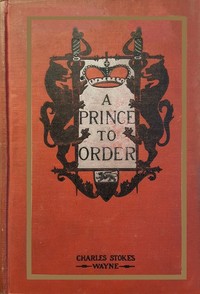
The source record for A Prince to Order — Inside the Classic measures this digital text at 60,441 words, 4 hr 23 min estimated reading time, and 6 detected text sections.
The text analysis averages about 16.8 words per sentence, while the detected sections provide another way to judge how the source is divided.
Project Gutenberg metadata also associates the work with “Inheritance and succession -- Fiction,” connecting these edition facts with the source record’s subject description.
Explore this collection
These alternatives are selected using recorded categories and estimated reading time.
About 266 minutes
Classic Adventures
61,101 recorded words. 3 minutes difference from this book's estimate.
View Gutenberg source #43838About 267 minutes
Classic Adventures
61,385 recorded words. 4 minutes difference from this book's estimate.
View Gutenberg source #31518About 256 minutes
Classic Adventures
58,876 recorded words. 7 minutes difference from this book's estimate.
View Gutenberg source #15979Search stored excerpts and compare books → Choose by your preferences →
Choices use stored catalog measurements. Estimates vary with reading speed. A shared category is a catalog label, not a claim that two books have the same argument or literary quality.
Search reads excerpt text stored with this catalog and links to its associated Gutenberg record. The connection is stored in the site database; this tool does not recheck that every excerpt is word-for-word identical to that external record. Excerpt search does not cover every chapter and does not verify historical publication dates.
Catalog snapshot checked: 2026-09-26. Coverage: 100 public books, 100 available source excerpts.
Calculated from edition completeness, EPUB availability, text structure and catalogue metadata. Not a user rating.
Total of 100 points, scaled to a 2.5-5.0 range. Editions with an empty description or a missing EPUB file are not scored.
Public-domain source text
The source text is kept in the dedicated reader, separate from this catalogue record and its commentary.
The novel begins with Carey Grey's disorienting awakening in a curtained bed, his senses gradually returning through tactile details: a silken coverlet, a cool linen pillow-case, pale blue draperies. The prose mirrors his foggy state—dreams and realities intermingle, his memory staggers. When he discovers a beard he did not have, the transformation is treated not as fantasy but as a concrete, bewildering fact. The narrative voice stays close to Grey's confusion, using short clauses and sensory fragments to build a mood of suspended identity.
Later, Grey receives a note from Miss Van Tuyl and dissects its language with lawyer-like precision. The word "probably" becomes a lifeline; "I can imagine" a loophole. This shift from physical disorientation to emotional analysis suggests a story where perception and interpretation are central.
The opening chapter establishes Grey's confusion through a carefully paced sequence of physical sensations. He wakes gradually, like a "clouded dawn," and the narrative follows his slow return to consciousness: the feel of fabric, the sound of a clock, the rumble of street noise. The prose is fragmented, with short sentences and ellipses that mirror his groping mind. When he discovers his beard—"close-cropped at the sides" and "an inch long"—the detail is presented as an objective fact, not a dream. The narrator does not explain how the beard appeared; Grey himself cannot remember. This restraint creates a puzzle that the reader must follow without omniscient guidance.
The setting is a Paris hotel room, but the description remains limited to what Grey perceives: pale blue draperies, a curtained bed, a clock. The city outside is only a distant rumble. This narrow focus keeps the reader inside Grey's disoriented perspective, making the later revelations about his identity and circumstances more impactful.
In a later excerpt, Grey receives a note from Miss Van Tuyl refusing to meet him. The narrative shifts from physical disorientation to psychological analysis. Grey reads the note repeatedly, weighing each word. The word "probably" in "it is probably better" becomes a beacon of hope; he sees it as "larger and more prominent than any other eight letters on the page." Similarly, the phrase "I can imagine nothing" is parsed for its implied openness. This close reading of a lover's language reveals Grey's character: he is a man who fights through interpretation, who finds leverage in qualification.
The passage also shows his emotional volatility. He moves from "pitiless" self-chastisement to swinging his stick "jauntily" after finding a loophole. The narrative tracks his mood swings with precision, using short, active sentences to convey his renewed determination. This section demonstrates that the novel's tension is as much internal as external.
The catalog subjects list "Impostors and imposture" and "Conspiracies" as key themes, and the excerpts hint at a Parisian setting that enables deception. Grey's beard—a physical imposture—is the first clue. Later, he sends his name on a slip of paper to Miss Van Tuyl at the Ritz, but she refuses to see him. The hotel, a public yet private space, becomes a stage for social maneuvering. The portier's message, "Miss Van Tuyl is not at home, monsieur," is a polite fiction that Grey must navigate.
The excerpts do not reveal the nature of Grey's earlier transgression, but the note's reference to "your action of the afternoon before" suggests a public or social misstep. The novel's title, A Prince to Order, implies a constructed identity, and the Paris setting—with its hotels, clubs, and operas—provides a backdrop for performance. Readers should watch for how characters use names, appearances, and social codes to create or conceal identities.
The excerpts show a narrator who stays close to Grey's perspective but occasionally steps back to report his thoughts in indirect discourse. For example, "He had been so sure of her; it had not seemed possible that she could ever be other than love and devotion and loyalty personified." This technique allows the reader to inhabit Grey's emotions while maintaining a slight distance. The narrative also uses temporal gaps: the opening chapter covers a single morning, but the later excerpt jumps to an unspecified later day. These gaps leave Grey's backstory and the events between scenes unstated, forcing the reader to infer.
The prose style is descriptive but economical, favoring concrete details over abstract commentary. The beard, the note, the hotel lobby—all are rendered with specificity. This restraint suggests a novel that values observation over explanation, and first-time readers should pay attention to what is shown rather than told.
These excerpts reveal a novel that begins with a physical mystery—a beard that appears overnight—and deepens into a psychological one, as Grey dissects a lover's note for hidden meanings. The Paris setting, with its hotels and social rituals, provides a stage for identity play. First-time readers should note how the narrative withholds information, using Grey's limited perspective to build suspense. The title's promise of a "prince to order" suggests that identity itself may be a construct, and the early chapters lay the groundwork for a story about performance, perception, and the gaps between them.
That rainy afternoon, I kept returning to Grey's baffled parsing of the lover's note—how we read hope into silence. It reminded me of another restless search for meaning in small gestures, and I found myself drifting to The adventures of Alphonso and Marina: An Interesting Spanish Tale — Key Ideas to Explore. Same quiet ache, different language entirely. I finished both before the rain stopped.
Use these questions to collect your thoughts before moving on.