About 281 minutes
The casting away of Mrs. Lecks and Mrs. Aleshine — Inside the Classic
Survival
64,603 recorded words. 35 minutes difference from this book's estimate.
View Gutenberg source #35570
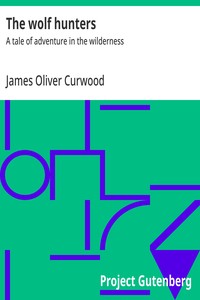
The source record for The wolf hunters — Reading Companion measures this digital text at 56,444 words, 4 hr 6 min estimated reading time, and 6 detected text sections.
The text analysis averages about 17.5 words per sentence, while the detected sections provide another way to judge how the source is divided.
Project Gutenberg metadata also associates the work with “Wolves -- Fiction,” connecting these edition facts with the source record’s subject description.
Explore this collection
These alternatives are selected using recorded categories and estimated reading time.
About 281 minutes
Survival
64,603 recorded words. 35 minutes difference from this book's estimate.
View Gutenberg source #35570About 134 minutes
Survival
30,600 recorded words. 112 minutes difference from this book's estimate.
View Gutenberg source #6936About 362 minutes
Survival
83,117 recorded words. 116 minutes difference from this book's estimate.
View Gutenberg source #54959Search stored excerpts and compare books → Choose by your preferences →
Choices use stored catalog measurements. Estimates vary with reading speed. A shared category is a catalog label, not a claim that two books have the same argument or literary quality.
Search reads excerpt text stored with this catalog and links to its associated Gutenberg record. The connection is stored in the site database; this tool does not recheck that every excerpt is word-for-word identical to that external record. Excerpt search does not cover every chapter and does not verify historical publication dates.
Catalog snapshot checked: 2026-09-26. Coverage: 100 public books, 100 available source excerpts.
Calculated from edition completeness, EPUB availability, text structure and catalogue metadata. Not a user rating.
Total of 100 points, scaled to a 2.5-5.0 range. Editions with an empty description or a missing EPUB file are not scored.
Public-domain source text
The source text is kept in the dedicated reader, separate from this catalogue record and its commentary.
The opening chapter of The Wolf Hunters establishes a winter landscape that is both stark and theatrical: the frozen lake is described as 'the basin of a great amphitheater,' and the moon rises 'like a red pulsating ball.' This heightened, almost stage-like description sets a tone of dramatic isolation. The narrative quickly introduces a wounded bull moose, whose suffering is signaled by a 'weird, thrilling sound' that a woodsman would recognize. The scene is less about hunting than about the tension of observation—the reader is positioned alongside an unseen watcher, attuned to the sounds and silences of the forest.
The Project Gutenberg catalog lists 'Wolves -- Fiction' and 'Wolf hunting -- Fiction' as primary subjects, yet the excerpts show wolves appearing only indirectly. In Chapter IX, the title 'Wolf Takes Vengeance Upon His People' suggests a wolf’s perspective, but the chapter actually follows Roderick Drew’s internal obsession with gold. The wolf is a symbolic presence, not a hunted creature. Similarly, 'Indians of North America -- Canada -- Fiction' is represented by Mukoki, but his role is that of a guide and companion, not a subject of ethnographic study. The narrative gives him dialogue and agency—he chuckles, grins, and offers opinions—yet his interiority remains opaque. The catalog subjects imply a focus on conflict and pursuit, but the excerpts emphasize landscape, mystery, and the lure of treasure.
Curwood’s prose repeatedly personifies the wilderness. The forest is 'black and forbidding,' the tamaracks 'bowed in the smothering clutch of snow and ice.' Silence is a recurring motif: 'the vast white silence of the night,' 'a deeper silence than before,' 'the death-like desolation.' These descriptions do more than set a scene; they create a character out of the environment. The chasm between mountains is described as 'dim and mysterious,' 'impenetrable to the winter sun,' and linked in Roderick’s mind to 'the tragedy of long ago.' The landscape is not merely a backdrop but a repository of secrets, actively shaping the plot’s direction. This technique aligns with the adventure genre but also gives the setting a psychological weight that the catalog subject 'Wilderness survival -- Fiction' only partially captures.
Roderick Drew’s motivations evolve across the excerpts. Initially, he is a novice hunter, learning from Mukoki. But by Chapter IX, his focus has shifted entirely to gold: 'From that hour was born in Roderick Drew's breast a strange, imperishable desire.' He reconstructs a narrative of the skeletons and the buckskin bag, convinced that the treasure ground is nearby. The catalog subject 'Hunters -- Fiction' suggests a straightforward pursuit of game, but Roderick’s hunt becomes archaeological and speculative. He 'kept his thoughts to himself' and 'impress[ed] upon his memory certain landmarks,' turning the wilderness into a map of potential wealth. This internal shift—from survival to obsession—is the real engine of the plot, and it is more psychological than the catalog terms imply.
Readers approaching The Wolf Hunters through its catalog subjects should expect a narrative that uses hunting and wilderness as frameworks for a treasure-hunt mystery. The wolf of the title is more emblem than antagonist, and Mukoki’s character offers a glimpse of Indigenous knowledge without full interiority. Pay attention to how Curwood’s landscape descriptions carry the story’s emotional weight, and note how Roderick’s desires shift from survival to speculation. The excerpts suggest a book less about the practicalities of wolf hunting than about the allure of hidden wealth and the silence of the northern woods.
Reading these wolf-hunt passages, I remembered sitting on my grandfather’s porch, turning pages long after dusk. Loneliness and silence felt the same there as here, in Curwood’s snow. That quiet aloneness returned when I first opened Robinson Crusoe — in Words of One Syllable — Reading Companion — a companion for solitude, not a cure. Both books let me breathe in that empty space.
Use these questions to collect your thoughts before moving on.