About 246 minutes
The wolf hunters — Reading Companion
Survival
56,444 recorded words. 35 minutes difference from this book's estimate.
View Gutenberg source #12170
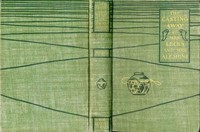
For The casting away of Mrs. Lecks and Mrs. Aleshine — Inside the Classic, the stored edition analysis reports 64,603 words, 4 hr 41 min estimated reading time, and 8 detected text sections.
The text analysis averages about 19.6 words per sentence, while the detected sections provide another way to judge how the source is divided.
Project Gutenberg metadata also associates the work with “Humorous stories,” connecting these edition facts with the source record’s subject description.
Explore this collection
These alternatives are selected using recorded categories and estimated reading time.
About 246 minutes
Survival
56,444 recorded words. 35 minutes difference from this book's estimate.
View Gutenberg source #12170About 362 minutes
Survival
83,117 recorded words. 81 minutes difference from this book's estimate.
View Gutenberg source #54959About 134 minutes
Survival
30,600 recorded words. 147 minutes difference from this book's estimate.
View Gutenberg source #6936Search stored excerpts and compare books → Choose by your preferences →
Choices use stored catalog measurements. Estimates vary with reading speed. A shared category is a catalog label, not a claim that two books have the same argument or literary quality.
Search reads excerpt text stored with this catalog and links to its associated Gutenberg record. The connection is stored in the site database; this tool does not recheck that every excerpt is word-for-word identical to that external record. Excerpt search does not cover every chapter and does not verify historical publication dates.
Catalog snapshot checked: 2026-09-26. Coverage: 100 public books, 100 available source excerpts.
Calculated from edition completeness, EPUB availability, text structure and catalogue metadata. Not a user rating.
Total of 100 points, scaled to a 2.5-5.0 range. Editions with an empty description or a missing EPUB file are not scored.
Public-domain source text
The source text is kept in the dedicated reader, separate from this catalogue record and its commentary.
The novel opens with the narrator, a passenger on a steamer from San Francisco to Yokohama, observing two middle-aged women who seem out of place among ordinary travelers. From the first day, Mrs. Lecks and Mrs. Aleshine are distinguished by their plain speech and unflappable demeanor. The story quickly moves from the ship to a shipwreck, then to an island where the castaways must improvise shelter and food. Stockton structures the narrative in six parts, each shifting the setting: the steamer, the island, a mysterious house, a mountain road, a volcanic slide, and a final rescue. Recurring images—such as the ginger-jar that appears in multiple scenes—anchor the episodic plot, while the widows' practical authority contrasts with the narrator's more passive role.
The narrator's initial attention is drawn to Mrs. Lecks and Mrs. Aleshine because they are "very unlike the ordinary traveler or tourist." This early distinction sets the tone: the widows are not passive sightseers but active, opinionated participants. The steamer itself is a confined space where social dynamics emerge—the narrator notes that the two women "spent the greater part of their time on deck," suggesting a preference for observation over indoor leisure. Stockton uses the ship as a microcosm, introducing the widows' voices through their direct, unadorned speech. For instance, Mrs. Aleshine's remark about sausages for shipwreck reveals a pragmatic, almost comic, approach to disaster. The narrator's role as observer is established here, a position he maintains throughout, often letting the widows drive the action and dialogue.
After the shipwreck, the castaways land on an island where the widows immediately take charge of practical matters. Mrs. Aleshine's lunch-baskets, described as "much more like market-baskets than anything else," become a running symbol of preparedness. The narrative lingers on details of food preparation and shelter, emphasizing the widows' competence. Mrs. Lecks, in particular, asserts moral authority through blunt confrontations—she delivers a "plain talk" to Mr. Enderton that covers "every sin" from his behavior on the island. The structure here shifts from survival to social comedy: the island becomes a stage for the widows' domestic governance, with the narrator often an amused bystander. Recurring images of fire-building and meal-sharing reinforce the theme of turning chaos into order.
Part IV introduces a new setting: a mountain road after the party leaves the island. The coach breaks down, stranding the group as night falls. Mrs. Lecks sits on a stone, her face "stern and rigid" after her confrontation with Mr. Enderton, who marches off alone. The narrator considers following him but decides against it, noting Ruth's weakness and Mrs. Aleshine's plumpness. The widows again take charge, building a fire and preparing a meal from their abundant provisions. The scene is static yet tense: the group waits all night in the coach, wrapped in rugs. This section highlights the contrast between Mr. Enderton's self-important departure and the widows' patient, practical waiting. The image of the fire "very grateful to us" underscores the comfort of small acts in an uncertain situation.
Throughout the novel, certain objects reappear, linking disparate scenes. The most notable is the "familiar fat little ginger-jar," which surfaces in Part V during a slide down the mountain. This jar, first mentioned in the island episodes, becomes a touchstone of continuity amid chaos. Stockton uses such items to ground the fantastical elements of the story—the volcanic slide, the mysterious house—in tangible, domestic reality. The illustrations by Frederic Dorr Steele further emphasize these objects: the frontispiece shows the two women on deck, while later plates depict the ginger-jar and the wharf. The structure of the novel, with its abrupt shifts from ship to island to mountain, is held together by these recurring details, reminding the reader that even in extraordinary circumstances, the widows' practical world persists.
Readers attentive to structure will notice how Stockton balances episodic adventure with a steady undercurrent of humor derived from the widows' unyielding common sense. The narrator's voice remains consistently observant, never overshadowing the two women who dominate every scene they inhabit. Pay particular attention to the way objects—baskets, jars, shawls—travel through the narrative, linking moments of crisis with moments of domestic calm. This is a story less about survival than about the triumph of ordinary competence over extraordinary circumstances.
I’ve always treasured how Mrs. Lecks and Mrs. Aleshine turn shipwreck into household chore, their stern kindness a lantern in the wild. There’s a like-minded quiet in The wolf hunters — Reading Companion, where practical grit meets the untamed woods without ever losing its tongue. Both feel like old friends, steady and unimpressed by danger.
Use these questions to collect your thoughts before moving on.