About 537 minutes
The Life and Most Surprising Adventures of Robinson Crusoe, of York, Mariner (1801) — A Reader’s Guide
Survival
123,479 recorded words. 31 minutes difference from this book's estimate.
View Gutenberg source #11866
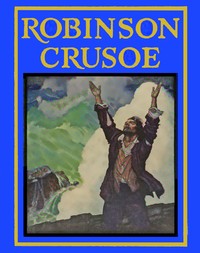
Before opening Robinson Crusoe — Context and Discussion, the edition data offers a quick orientation: 116,198 words, 8 hr 26 min estimated reading time, and 33 detected text sections.
The text analysis averages about 42.5 words per sentence, while the detected sections provide another way to judge how the source is divided.
Project Gutenberg metadata also associates the work with “Shipwreck survival -- Fiction,” connecting these edition facts with the source record’s subject description.
Explore this collection
These alternatives are selected using recorded categories and estimated reading time.
About 537 minutes
Survival
123,479 recorded words. 31 minutes difference from this book's estimate.
View Gutenberg source #11866About 544 minutes
Survival
125,022 recorded words. 38 minutes difference from this book's estimate.
View Gutenberg source #521About 555 minutes
Survival
127,617 recorded words. 49 minutes difference from this book's estimate.
View Gutenberg source #11239Search stored excerpts and compare books → Choose by your preferences →
Choices use stored catalog measurements. Estimates vary with reading speed. A shared category is a catalog label, not a claim that two books have the same argument or literary quality.
Search reads excerpt text stored with this catalog and links to its associated Gutenberg record. The connection is stored in the site database; this tool does not recheck that every excerpt is word-for-word identical to that external record. Excerpt search does not cover every chapter and does not verify historical publication dates.
Catalog snapshot checked: 2026-09-26. Coverage: 100 public books, 100 available source excerpts.
Calculated from edition completeness, EPUB availability, text structure and catalogue metadata. Not a user rating.
Total of 100 points, scaled to a 2.5-5.0 range. Editions with an empty description or a missing EPUB file are not scored.
Public-domain source text
The source text is kept in the dedicated reader, separate from this catalogue record and its commentary.
Robinson Crusoe's narrative voice is remarkably consistent in its plain, factual tone, yet the pace of the story varies dramatically. Early chapters move swiftly through sea voyages and misadventures, but once Crusoe is stranded, the rhythm slows to match the laborious tasks of survival. Defoe lingers over the construction of a dwelling, the making of earthenware, and the taming of a parrot, giving each activity a weight that makes time feel palpable. The prose itself becomes a record of incremental progress.
The middle sections of the novel are dominated by detailed accounts of manual work. Crusoe describes building a canoe, fashioning a tobacco pipe, and weaving baskets with a precision that borders on the technical. The sentences are often long and packed with sequential actions, as in the passage where he explains how he used a wheel to make earthenware: “I arrived at an unexpected perfection in my earthenware, and contrived well enough to make them with a wheel, which I found infinitely easier and better.” This accumulation of practical detail creates a sense of slow, deliberate time, contrasting with the earlier rapid-fire adventures.
Not all of Crusoe's island time is measured in labor. After a near-fatal voyage around the island, the narrative pauses for introspection: “I had now had enough of rambling to sea for some time, and had enough to do for many days to sit still, and reflect upon the danger I had been in.” Here the pace slows almost to a halt, as Crusoe resigns himself to a “sedate, retired life.” These reflective interludes are marked by shorter sentences and a more meditative tone, offering a counterpoint to the energetic descriptions of building and hunting. The alternation between action and contemplation shapes the reader's experience of Crusoe's isolation.
Crusoe's first-person narration is deliberately unpolished, full of colloquial phrases and repetitive structures that mimic spoken language. He addresses the reader directly (“as you may well suppose”) and uses exclamations like “Poor Robin Crusoe!” when his parrot returns. This conversational style lends an air of authenticity to even the most improbable events. The voice remains steady throughout, but the pace of the telling—sometimes breathless, sometimes leisurely—reflects Crusoe's emotional state. When he is anxious, the sentences grow shorter; when he is content, they expand into long, detailed catalogues. Defoe uses these shifts to keep the narrative grounded in Crusoe's subjective experience.
Readers attentive to changes in pace will notice how Defoe manipulates time to convey the psychological weight of solitude. The novel's power lies not in dramatic plot twists but in the accumulation of small, precisely observed moments. Pay attention to the length of sentences and the density of detail: they are the true markers of Crusoe's inner life.
There’s a strange companionship in Robinson Crusoe’s patient, unhurried account of his days—how solitude starts to feel less like emptiness and more like a quiet conversation with yourself. I found that same lingering ache in Wanderers of the Wolf-Moon — Reading Notes, the way a journey on a wild edge can make you hear your own heartbeat differently. It stayed with me softly, like a warm stone in a pocket.
Capture what you thought, learned, and would like to remember.