About 381 minutes
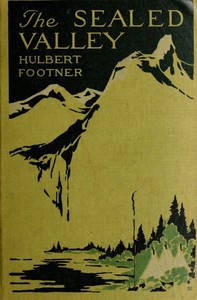
The Sealed Valley — A Reader’s Guide
Voyages
87,607 recorded words. 2 minutes difference from this book's estimate.
View Gutenberg source #57139

The Silent Barrier — Reading Notes can be approached with a clearer sense of reading commitment from its source measurements: 87,935 words, 6 hr 23 min estimated reading time, and 10 detected text sections.
The text analysis averages about 14.5 words per sentence, while the detected sections provide another way to judge how the source is divided.
Project Gutenberg metadata also associates the work with “Adventure stories,” connecting these edition facts with the source record’s subject description.
Explore this collection
These alternatives are selected using recorded categories and estimated reading time.
About 381 minutes
Voyages
87,607 recorded words. 2 minutes difference from this book's estimate.
View Gutenberg source #57139About 445 minutes
Voyages
102,258 recorded words. 62 minutes difference from this book's estimate.
View Gutenberg source #48068About 468 minutes
Voyages
107,463 recorded words. 85 minutes difference from this book's estimate.
View Gutenberg source #9150Search stored excerpts and compare books → Choose by your preferences →
Choices use stored catalog measurements. Estimates vary with reading speed. A shared category is a catalog label, not a claim that two books have the same argument or literary quality.
Search reads excerpt text stored with this catalog and links to its associated Gutenberg record. The connection is stored in the site database; this tool does not recheck that every excerpt is word-for-word identical to that external record. Excerpt search does not cover every chapter and does not verify historical publication dates.
Catalog snapshot checked: 2026-09-26. Coverage: 100 public books, 100 available source excerpts.
Calculated from edition completeness, EPUB availability, text structure and catalogue metadata. Not a user rating.
Total of 100 points, scaled to a 2.5-5.0 range. Editions with an empty description or a missing EPUB file are not scored.
Public-domain source text
The source text is kept in the dedicated reader, separate from this catalogue record and its commentary.
Louis Tracy's The Silent Barrier opens with a scene set in a London hotel, where the American Charles K. Spencer collects his mail. The prose immediately establishes a contrast between the efficient, cosmopolitan setting and the wild Alpine terrain that will soon dominate the narrative. Tracy's diction is precise: the letter clerk notes Spencer's 'clean cut features of a Greek statue' and 'brilliant, deep set, earnest eyes,' signaling a protagonist of action and thought. The dialogue is clipped and functional, reflecting the transactional nature of the hotel world.
Yet the novel's true voice emerges in the Alpine sections, where the language shifts to accommodate the physical and psychological pressures of the mountains. The guide Stampa's exclamation—'God in heaven! can it be that my prayer is answered at last?'—introduces a note of supernatural dread that undercuts the earlier realism. Tracy's authorial choices in diction and dialogue thus prepare the reader for a story where the barrier is both literal (a glacier) and figurative (a secret from the past).
Tracy's vocabulary for the mountain landscape is specific and unromanticized. He uses terms like 'guxe' (a local wind), 'voyageur' (a traveler or guide), and 'col' (a mountain pass) without explanation, trusting the reader to infer meaning from context. This choice grounds the narrative in a particular geography—the Engadine region of Switzerland—and lends authenticity to the characters' expertise. The guides Stampa and Barth argue over the severity of the weather using technical language: 'a guxe was blowing up from the south,' says Barth, while Stampa dismisses the glacier as 'this child's glacier.' The contrast between their assessments creates tension, as the reader must weigh competing claims about the danger. Tracy avoids generic descriptions of 'mountains' or 'storms'; instead, he specifies 'thunder clouds,' 'sleet,' and 'lightning playing on the glacier,' making the environment a palpable force.
Tracy uses dialogue to reveal character traits and social hierarchies. Spencer's speech is direct and imperious: 'Right here, please, in No. 20 slot.' The clerk's deferential response—'I will attend to it'—underscores Spencer's wealth and status. In contrast, the guides speak in a mix of English, French, and German, reflecting their multilingual Alpine world. Stampa's voice is marked by exclamations and religious invocations: 'God in heaven!' and 'Ma foi!' (my faith). Bower, the English mountaineer, speaks with measured anxiety: 'There is peril—real peril—in delay.' Helen, the female protagonist, uses polite but firm language to mediate between the men: 'I am very much obliged to you for taking so much trouble.' Tracy's dialogue thus serves not only to advance the plot but to delineate class, nationality, and temperament.
Tracy builds suspense through a careful arrangement of information. The opening chapter, 'The Wish,' introduces Spencer's desire for adventure, but the fulfillment is delayed until Chapter II. The narrative then shifts to the Alpine setting, where the weather deteriorates gradually. Tracy uses the guides' conflicting opinions to create uncertainty: Barth insists the glacier is safe, while Stampa warns of the 'guxe.' The reader is privy to the characters' private thoughts—Spencer's disdain for Bower's caution, Helen's awareness of Bower's true motives—but not to the full backstory. The climax of the excerpt occurs when Stampa recognizes Bower's name: 'Marcus Bauer,' he hisses, a name that echoes the German form of 'Mark Bower.' This revelation is withheld from the reader, who must infer its significance from Stampa's reaction. Tracy's structural choice to delay explanation heightens the mystery.
The novel's title, The Silent Barrier, is echoed in the epigraph from Rückert: 'That is the Barrier within which I am pent by the World on the one hand and Nature on the other.' Tracy reinforces this motif through the glacier itself, which serves as both a physical obstacle and a symbol of hidden truths. The name 'Bower' (or 'Bauer') becomes a second barrier: Stampa's recognition of it triggers a shift in the narrative from adventure to psychological drama. Tracy also uses the motif of the 'prayer'—Stampa's muttered 'my prayer is answered at last'—suggesting that the encounter is fated. These recurring elements give the story a cohesive symbolic structure, even as the plot remains incomplete in the excerpts.
Readers approaching The Silent Barrier should attend to Tracy's use of dialogue as a vehicle for character and conflict. The novel's power lies not in its plot twists but in the way language reveals hidden tensions—between guides, between guests, and between the past and present. The excerpts offer only a glimpse of the glacier crossing; the full novel likely develops the consequences of Stampa's recognition. Tracy's authorial choices reward close reading, particularly his integration of technical Alpine terminology and his manipulation of point of view.
That glacier scene in The Silent Barrier stayed with me—how a name can suddenly shift everything between two people. It reminded me of another old story where identity quietly changes the course of a friendship. Left to Themselves: Being the Ordeal of Philip and Gerald — Edition Insights carries that same soft tension, the unspoken weight two travelers carry together. I found myself thinking about it for days afterward.
Build a private reading journal entry for this title.