About 383 minutes
The Silent Barrier — Reading Notes
Voyages
87,935 recorded words. 2 minutes difference from this book's estimate.
View Gutenberg source #31635
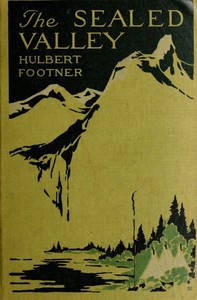
The catalog record for The Sealed Valley — A Reader’s Guide provides practical reading context through 87,607 words, 6 hr 21 min estimated reading time, and 8 detected text sections.
The text analysis averages about 11.3 words per sentence, while the detected sections provide another way to judge how the source is divided.
Project Gutenberg metadata also associates the work with “Indians of North America -- Fiction,” connecting these edition facts with the source record’s subject description.
Explore this collection
These alternatives are selected using recorded categories and estimated reading time.
About 383 minutes
Voyages
87,935 recorded words. 2 minutes difference from this book's estimate.
View Gutenberg source #31635About 445 minutes
Voyages
102,258 recorded words. 64 minutes difference from this book's estimate.
View Gutenberg source #48068About 468 minutes
Voyages
107,463 recorded words. 87 minutes difference from this book's estimate.
View Gutenberg source #9150Search stored excerpts and compare books → Choose by your preferences →
Choices use stored catalog measurements. Estimates vary with reading speed. A shared category is a catalog label, not a claim that two books have the same argument or literary quality.
Search reads excerpt text stored with this catalog and links to its associated Gutenberg record. The connection is stored in the site database; this tool does not recheck that every excerpt is word-for-word identical to that external record. Excerpt search does not cover every chapter and does not verify historical publication dates.
Catalog snapshot checked: 2026-09-26. Coverage: 100 public books, 100 available source excerpts.
Calculated from edition completeness, EPUB availability, text structure and catalogue metadata. Not a user rating.
Total of 100 points, scaled to a 2.5-5.0 range. Editions with an empty description or a missing EPUB file are not scored.
Public-domain source text
The source text is kept in the dedicated reader, separate from this catalogue record and its commentary.
The novel opens with a painterly description of the Campbell River valley, where the raw frontier town of Fort Edward is taking shape. The narrator notes that the settlement looks "sodden and raw after much rain," with wet tents and yellow pine shacks. This setting immediately establishes a world of rough optimism and impermanence, where the promise of a transcontinental railway draws hopeful settlers. The protagonist, Ralph, is introduced amid this landscape, and the early chapters hint at his profession as a physician—a detail that will shape his interactions in the wilderness.
The opening chapter sets up a stark visual contrast between nature's grandeur and human makeshift. The Campbell River is described as a "fair painting" destined to be "smudged by a town." This tension between the pristine and the encroaching is reinforced by the description of Fort Edward's architecture: wet tents with rusty stovepipes and new pine shacks with tar-paper roofs. The only two-story building, Maroney's hotel, looms "like a packing-case among soap-boxes." Such details ground the story in a specific material reality, where the town's aspirations are undercut by its crude appearance. The narrator's wry tone—calling the muddy street the future "main artery of traffic"—suggests a skeptical view of frontier boosterism.
A key scene in the middle excerpts occurs around a campfire, where the trader Cranston warns Ralph against mixed marriages. Cranston speaks from bitter experience, describing how such unions often lead to tragedy: the man either "sinks to her level" or the woman becomes a "devil" when she cannot meet his expectations. He warns of children "neither red nor white" who face an unanswerable future. Ralph dismisses this advice, believing Nahnya to be "an exception." The scene is immediately followed by the appearance of Cranston's half-breed wife, who erupts in "withering invective" before being subdued by his command. This episode foreshadows the central conflict of the novel, as Ralph's idealism clashes with the harsh realities of cultural division.
Cranston explicitly frames himself as an "object lesson" for Ralph, yet the younger man fails to learn. After the confrontation, Ralph falls asleep "gloating upon how different Nahnya was." This moment of self-deception is crucial: it shows Ralph's refusal to apply Cranston's experience to his own situation. The narrator's irony is evident in the phrase "as an object lesson it was a failure." Later, in Chapter XIII, Ralph travels to the coast to buy a gift for Nahnya, indicating his continued commitment to the relationship. The excerpts do not reveal the outcome, but the pattern of warning and disregard sets up a dramatic tension that likely drives the narrative forward.
Footner employs a third-person narrator who occasionally adopts a wry, knowing tone, as when describing Fort Edward's pretensions. The dialogue is naturalistic, with Cranston's speech marked by colloquialisms like "my girl" and "take the word of an old-timer." The structure alternates between descriptive passages and dramatic scenes, such as the campfire debate. The excerpts also reveal a pattern of interrupted conversations: Ralph cannot talk of his affairs, and Cranston's story is cut short by his wife's outburst. This technique keeps information withheld, building suspense. The chapter titles—"Romance," "Outside," "The Object Lesson"—suggest a thematic organization around Ralph's journey and his illusions.
Readers should attend to how Footner uses the landscape as both setting and symbol. The "sealed valley" of the title likely represents a hidden or isolated place, but its meaning may shift as the story unfolds. Pay attention to how Ralph's perspective evolves—or fails to—in response to the warnings and events he encounters. The excerpts suggest a novel that is as much about the psychology of its protagonist as about the wilderness adventure.
Some nights I still think about Ralph and Nahnya by that fire, how love can slip past what we thought we knew. That same unease lingers in Cursed — Context and Discussion, though there it feels quieter, more like a dusk creeping in. Funny how old stories keep their hold. I find myself returning to both, just to sit with them awhile.
Create a short personal record of your experience with this book.