1

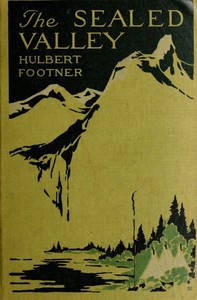
The Sealed Valley — A Reader’s Guide
(6 User reviews)
1132
Project Gutenberg
2018
Indians of North America -- Fiction; Physicians -- Fiction; Canada -- Fiction; Man-woman relationships -- Fiction; Voyages and travels -- Fiction
Readers of public-domain and historical texts
Project Gutenberg digital edition
en
Edition facts
Words: 87,607
Reading time: 381 min
Text sections: 8
Source:
Project Gutenberg record #57139
Footner's novel follows physician Ralph through the Canadian wilderness, where a chance encounter with a half-breed woman named Nahnya challenges his assumptions about race and love, as revealed in the opening's raw frontier setting and later campfire debates.
Editorial Edition Score
4.8/5
★★★★★
★★★★★
Calculated from edition completeness, EPUB availability, text structure and catalogue metadata. Not a user rating.
Edition quality
Read the Text
I. Romance II. On Board the "_Tewksbury_" III. On the Little River IV. The Day of Days V. The Rice River VI. Blind Man's Buff VII. Bowl of the Mountains VIII. In the Valley IX. Nahnya's Story X. Moonlight XI. The Departure from the Valley XII. The Object Lesson XIII. Outside XIV. The Journey in Again XV. The Stanley Rapids XVI. The Two Girls XVII. The Granted Prayer XVIII. The Triangle XIX. New Actors on the Scene XX. The Secret Escapes XXI. The Return to the Valley XXII. Renunciation XXIII. The Last Scene XXIV. Epilogue
LIST OF ILLUSTRATIONS
"She turned a quick face at the sound of their footsteps" . . . Frontispiece (missing from source book)
"Ralph never guessed he was being searched through and through by a woman's loving, jealous curiosity"
"An instant later a long dugout swept into view, with four men in it"
"She had raised and pointed the gun, but held her fire"
One of the fairest paintings of Nature was at that point among the mountains of the Canadian province of Cariboo where the Campbell River takes the Boardman to its bosom and swings south on its pilgrimage to the Pacific. Like all of Nature's more dramatic compositions, by reason of its very effectiveness, it was predestined to be smudged by a town, and the collection of shacks and tents known as Fort Edward was already begun. It was conceded that Fort Edward was bound to be a great city when the new transcontinental passed through. To be sure, railhead was still beyond the mountains, a matter of two or three years' construction, but the noise of the town's greatness-to-be had been industriously drummed up by real-estate operators outside, and many optimists had struggled up the three hundred miles of the Campbell Valley from the existing railway to be on hand in plenty of time.
On a day in June of the year when the "rush" began, the settlement looked sodden and raw after much rain. The two prevailing styles of dwellings were wet "A" tents with projecting, rusty stovepipes and new pine shacks of a crass yellow, having roofs of tar paper studded with tin-headed tacks as big as half dollars. A single two-story building loomed up in the middle like a packing-case among soap-boxes. This was the Fort Edward Hotel, better known as Maroney's. The other habitations reached out on either hand in an irregular double row.
The space within the double row was going to be "the main artery of traffic" some day, but where the optimists (and the real-estate operators) fondly foresaw automobiles and trolley cars rolling up and down, at present there was nothing but a parade of jagged stumps among which muddy paths threaded their devious ways. Below the hotel a tiny stern-wheeler of quaint, lubberly design lay with her nose tucked in the mud of the river bank. At eleven in the morning there were few humans in sight, because the black flies were in murderous fettle, and anyway, the principal industry of the place was--waiting for the railway.
One had only to raise one's eyes to receive a quite different impression of the scene. Where man's work looked sodden, Nature's was deliciously refreshed. The world wore that honest look it shows after rain before the sun comes out, that calm openness under the pure light that casts no shadows. The pine-clad mountains loomed near and clean and dark. The cloud wrack pressed down close upon their heads, giving the valley the confined and intimate look of a room. There were already rents in the ceiling, revealing a tender blue back-cloth. The air was as sweet in the nostrils as spring water in a parched throat.
Farthest from the hotel on the Campbell River side was a shack more of the dimensions of a chicken house than a residence for humans. Beside the door was nailed a little sign obviously painted by an unprofessional hand, reading, "Ralph Cowdray, M.D." Within, in the first of the two closets the shack comprised, sat the doctor and his friend Dan Reach, the telegraph operator, the first with his heels cocked on the packing-case that served him for a desk, the other with his lower extremities supported by the window-sill. From each ascended a column of smoke. The only other furniture of the room was a little stand of pine shelves in the corner bearing the doctor's slender library and pharmaceutical stock, books and bottles as new as the doctor's office and the doctor himself.
The two men mustered forty-nine years between them, with the odd year on the telegrapher's side. The doctor was a youth of middle height with a strong, well-knit frame, and a comely head broadest over the ears, with a luxuriant thatch of dark brown. His face was strongly moulded, almost too heavy in its lines for his years, but oddly redeemed by a pair of dreamy brown eyes. There was an interesting contradiction here: nose, mouth, chin, suggested a commendable hardihood, an honest obstinacy, while the eyes seemed to see through and beyond what they were turned on. Like all resolute young men, Ralph regarded the softer side of his character as a weakness and hid it close. Like other young men again, he paid his way through the world with the small change of a facetious manner, which reduces them all to a common, comfortable level.
Ralph and Dan killed time with endless, jocular quarrelling. Their dependence on each other's society in this dull little settlement had brought about an unusual degree of intimacy in a few weeks. In other words, they were almost honest with each other. At present Ralph's facetious manner only half concealed a very real grievance against life.
"Romance is extinct, like the dodo," he announced.
Dan was a tall, lean young man, inclining to the saturnine type. "That requires examination," he said judicially. "First, define Romance."
"Romance," said Ralph, throwing back his head and puffing a tall column of smoke toward the ceiling--the dreaminess of his eyes had full sway at that moment--"Romance is every man's unrealized desire."
"You contradict yourself," said Dan with provoking exactness. "How can a thing be dead which was never realized?"
The question was awkward, so Ralph serenely ignored it. "Ever since I went into long trousers I've been looking for it," he went on lightly. "Nothing doing!"
"Maybe that's the trouble," suggested Dan; "maybe Romance begins at home."
"Did you ever find it?" challenged Ralph.
"Never looked," returned Dan calmly.
"Oh, you've no imagination!"
Dan chuckled. "According to that, Romance is only imaginary, then. Got you again, Doc!"
Naturally these discussions never arrived anywhere. When one was stumped for an answer he hit out on a new line. The thing was to keep the ball in play by any device until the next meal created a diversion.
"I thought college would be romantic," Ralph went on. "I had fun of course, bully fun, but just the ordinary college fun. There were girls, plenty of 'em, dear little things! transparent as window-glass. Gad! a man longs to meet a woman who can fascinate him, and stir him to the bottom, and keep him guessing!"
"Well, let me see what we've got in Fort Edward," said Dan. "To begin with, there's Biddy Maroney----"
"Cut it out!" cried Ralph. "Fatal to thoughts of Romance! After college there was the medical school and the hospitals," he went on. "They knocked the spots out of Romance. Say, a city doctor loses faith in his fellowmen. I decided I'd hang out my shingle in the woods, and I came up here because it was the beyondest place I could hear of."
"Thinking you'd surely find Romance somewhere back of beyond," suggested Dan.
"Sure! The noble red man, you understand; the glittering-eyed prospector lusting for gold; the sturdy pioneer hewing a home for his brood in the wilderness--and all that! Well, here I am, and what is it?--a village of poor suckers done up brown, like myself, by the real-estate sharks outside!"
"Striking metaphor!" murmured Dan.
"Everybody sitting on their tails expecting to be rich any day by the grace of God!" Ralph went on. "And Indians! swillers of beer-dregs! Town scavengers! Moreover, it's the healthiest place on earth, I believe. I never get a case but a scalp wound or two after a big night at Maroney's. As for Romance, she's as far away as ever! And I'm getting on!"
"True," said Dan, with a serious wag of the head, "you've no time to lose!"
As a matter of fact, Ralph's youthfulness was a sore subject with him, as it is with all young doctors.
He let the dig pass unnoticed. "I've almost given up hope," he said.
There was a knock at the door.
"Here she is now," said Dan dryly.
"Come in," said Ralph indifferently.
It was a woman, but only an Indian woman dressed in a ridiculous travesty of white women's clothes. The two young men lowered their feet, and exchanged a humorous glance. After an idle look, Ralph's regard returned to his pipe. To tell the truth, he had found the Indians around Fort Edward as patients neither profitable nor grateful, and he could not be expected to welcome a new one with any enthusiasm. Dan was the more impressed; he studied the girl with a kind of wonder, and from her looked curiously at his friend.
"I want to see the doctor," she said, in a soft and agreeable voice.
"What can I do for you?" asked Ralph, off-hand.
She did not answer immediately, and he looked at her again. Her eyes were bent on Dan, unmistakably conveying a polite hint. Dan saw it and rose.
"See you at Maroney's at dinner," he said, passing out with a backward glance at his friend; teasing, a little wondering still, and frankly envious.
"Well?" said Ralph, looking his caller over with a professional eye. She seemed healthy. For an Indian she was very good-looking, but this fact reached him only by degrees. Her clothes were deplorable: a flat red hat with a pert frill balanced crazily on her glossy hair; a curiously tortured blue satin waist; a full woollen skirt hanging on her like an ill-made bag, and cheap, new, misshapen shoes. The effect was as if some wag had draped a classic statue in a low comedy make-up. Naturally Ralph received his first impression from the make-up.
In answer to his measuring glance she said: "I not sick. I come to get you for my mot'er."
Ralph reached for his hat.
"Wait a minute," she said. "We must talk before."
"Sit down," said Ralph.
She shook her head. "I stand," she said coolly.
There was a pause while she studied him with grave, troubled eyes. "You ver' yo'ng to be a doctor," she remarked at length.
Ralph frowned in an elderly way, and bit his lip.
"Are you a good doctor?" she asked.
He laughed in his annoyance. "What am I to say to that?"
His laughter disconcerted her. "I mean a college doctor," she said sulkily.
"McGill, Bellevue," said Ralph.
"I don't know those," she said. "Have you any writings?"
Ralph stared at her. "What a question from an Indian!" he thought. He began to be aware that he was dealing with a distinct individuality, and for the first he perceived the classic beauties obscured by the grotesque outer semblance. The anatomist in him judged and approved the admirable flowing lines of her body, and the lover of beauty thrilled. One of her greatest beauties was in the graceful poise of her head on her neck. Indian women commonly have no necks to speak of. His gaze rose to her eyes and lost itself for a moment. All the Indians he had seen hitherto had hard, flat, shallow eyes; hers had depth and purpose and feeling. "Extraordinarily beautiful eyes!" he thought, with the start of a discoverer.
His good humor restored, he showed her his diplomas, following the script with a forefinger, and reading aloud.
"I can read," she said calmly.
"But that is fonny printing," she confessed.
Her next question surprised him afresh. "Can you cut?"
"Cut?" echoed Ralph, gaping a little. "You mean surgery? Yes."
"My mot'er, she break her arm," the girl explained. "I set it myself. I know that. After that I have to go away. She take off the--what do you call the sticks--?" She illustrated.
"Splints," put in Ralph.
"Yes, she take off the splints too soon, and try to work, and when I come home her arm is all crooked. All the time it grows more crookeder. She is so scare' she is sick. Can you fix it?" she asked anxiously.
"Surely!" said Ralph. "The arm must be broken again and reset."
"Broken again?" the girl said, with an alarmed look. "That hurt her bad. She not let you do that, I think. Can you put her to sleep?"
"Anæsthetic? Certainly!" said Ralph. "Where did you learn about anæsthetics?" he asked curiously.
"I have work in Prince George and Winnipeg three years," she said. "I know about a hospital."
"I'll come and take a look at your mother," Ralph said. In his manner there was still something of a doctor's condescension to an humble patient. "Where do you live?"
She paused before replying, and looked at him with a certain apprehensiveness. "North," she said slowly. "Seven days' journey from Gisborne portage."
He was effectually startled out of his superior attitude. "Seven days!" he cried. "How on earth do you expect me to do that!"
"I take you in my canoe," she said. "You back here three weeks or one month."
When he recovered from his first surprise the comic aspect of it struck him: to travel a month to see one sick Indian! "Well, I'm----" he began, but the look in her eyes arrested the participle. "A month!" he cried.
She was sensitive to ridicule; a proud, sullen look came over her face. "I pay you," she said quickly. "I pay what you want."
Ralph laughed indulgently. "I'm afraid you don't realize what it's worth," he said. "A month of a doctor's time! It would be cheap at three hundred dollars."
"I don't want you cheap," she said, with the air of a princess. "I pay more."
Ralph looked at the absurd hat she wore, and struggled with his laughter. She was beautiful, she was amazing, but she _was_ comic. "What am I up against?" he thought. Aloud, he said in a friendly way: "It's a lot of money. Tell me something about yourself and your people. What is your name? Where will you get so much money?"
But his laughter had angered her; her face expressed only a sullen blank. She did not answer.
"What is your name?" Ralph repeated. "You must answer my questions, you know."
"I tell you what I like," she said scornfully.
Ralph was irritated. "Do you expect me to start on a wild-goose chase into the wilderness without knowing what I'm letting myself in for?" he said sharply.
"I pay you before you go," she said, with her princess air.
It did not help to soothe him. "Hang the pay!" he cried. "I'm not for sale. I don't go in for a thing unless I'm satisfied it's straight!"
She was not in the least intimidated by his raised voice. "You only got to do doctor's work," she said coldly.
Ralph stared at her, confused and nonplussed by the variety of emotions she excited in him. Her beauty aroused him, her indifference piqued him, and her inscrutability provoked his curiosity to the highest degree. Obstinacy in another always had the effect of awakening the same quality in Ralph. He said coldly: "It sounds queer to me. I'm not interested."
Clearly she still clung to the idea that it was a question of payment with him. His glances of scornful amusement at her clothes had not escaped her woman's perceptions. "You think I poor," she said. "You think I got nothing. I got plenty."
"I don't care what you've got," said Ralph. "Deal with me openly, and I'll meet you halfway."
Her hand went to the bosom of her dress and closed around something that was hidden there. "If I show you something, you promise not to tell?" she said, with sudden earnestness. "You shake hands and promise not to tell?"
More mystery! Curiosity waxed great in Ralph's breast and struggled with his irritation. "Hang these people!" he thought. "You never can tell what they're up to!" To her he said unwillingly: "If it's straight I promise not to tell."
"It is straight," she said proudly.
They shook hands on it. She drew a little bag of moosehide from her dress, and untied the thong that bound its mouth. Attentively watching Ralph's face to observe the effect on him, she suddenly turned the bag upside down over his desk, and a little flood of coarse yellow sand poured out upon it with a soft swish. There could be no mistaking the cleanness and the shine of it.
Ralph sprang up. "Gold!" he cried, amazed.
"It is yours," she said, with a little smile. "I give you more if you make my mot'er's arm straight."
"Where did you get it?" Ralph asked sharply.
"I dig it myself," she said. "Do you think I steal it?"
Ralph continued to stare at the yellow stuff as if it had hypnotized him.
"Better put it away," suggested the girl. "Somebody come, maybe. To see gold make white men crazy."
He swept it up handful by handful, and poured it back into the little bag. There was a magic in the feel of the bright, sharp grains and in the extraordinary weight of it that caused a red flag to be run up in his cheeks, and his eyes to shine. He judged from the weight of the little bag that he had in his hand already double the fee he had asked.
By and by she said: "You come now?"
Ralph frowned. "What do you want to make such a mystery of the trip for?"
"I could lie to you if I want," she said, "and you not know."
Ralph's eyes were compelled to acknowledge the truth of this.
She paused with a little frown as if she had matter to convey that was difficult to put into speech. "I not tell you all my things," she went on slowly, "because I not know you ver' moch. By and by I tell you what I can."
He looked at her in silent astonishment. What extraordinary delicacy to find in a common Indian girl! As he gazed at her he abandoned that conception of her for good and all. Whatever she might be it was not common. The sullenness evoked by his laughter had passed, and her eyes now met his squarely. Pride and wistfulness contended in their dark depths. Whatever the colour of her skin they were the eyes of a woman with a soul. What he read in them caused his heart to quicken its beats. He made note of other beauties in passing: the lovely tempting curve of her cheek, and how the colour came and went in it; her lips fresh and crimson as rose-leaves.
"You have white blood," he said suddenly.
"At least you can tell me your name," he said.
"Annie Crossfox," she said unhesitatingly. "White people say Annie; my people, Nahnya."
A slight constraint fell upon them. They were silent. Ralph's attitude toward the proposed journey was rapidly changing. To give him credit, it was her eyes more than the gold that worked the change. How could he have failed to be instantly struck by her beauty, he thought.
"You will come?" she murmured at length.
"When do you want to start?" he said.
"The steamboat go up to Gisborne after dinner to-morrow," she said. "We walk across Gisborne portage six miles to Hat Lake. There my boat is cached."
"What can I tell these people here?" said Ralph. "I can't just disappear."
"Tell them you take the chance of the boat going up, to see a little of the country. Everybody do that sometimes."
To "see the country" beyond was Ralph's dearest desire; to float down its rivers, to climb its mountains, to camp under its stars. And to travel seven days in a canoe with her! The Spirit of Youth rose in its might and dealt old Prudence a finishing blow.
"All right!" cried Ralph. "I'll come!"
"Thank you," she said quietly.
Somewhat to his disappointment she showed no elation; indeed, no sooner had she won him to go than she looked at him with a new question in her eyes, with a painful and hesitating air.
"What's the matter?" said Ralph.
The novel opens with a painterly description of the Campbell River valley, where the raw frontier town of Fort Edward is taking shape. The narrator notes that the settlement looks "sodden and raw after much rain," with wet tents and yellow pine shacks. This setting immediately establishes a world of rough optimism and impermanence, where the promise of a transcontinental railway draws hopeful settlers. The protagonist, Ralph, is introduced amid this landscape, and the early chapters hint at his profession as a physician—a detail that will shape his interactions in the wilderness.
A Frontier of Contrasts
The opening chapter sets up a stark visual contrast between nature's grandeur and human makeshift. The Campbell River is described as a "fair painting" destined to be "smudged by a town." This tension between the pristine and the encroaching is reinforced by the description of Fort Edward's architecture: wet tents with rusty stovepipes and new pine shacks with tar-paper roofs. The only two-story building, Maroney's hotel, looms "like a packing-case among soap-boxes." Such details ground the story in a specific material reality, where the town's aspirations are undercut by its crude appearance. The narrator's wry tone—calling the muddy street the future "main artery of traffic"—suggests a skeptical view of frontier boosterism.
The Campfire Warning
A key scene in the middle excerpts occurs around a campfire, where the trader Cranston warns Ralph against mixed marriages. Cranston speaks from bitter experience, describing how such unions often lead to tragedy: the man either "sinks to her level" or the woman becomes a "devil" when she cannot meet his expectations. He warns of children "neither red nor white" who face an unanswerable future. Ralph dismisses this advice, believing Nahnya to be "an exception." The scene is immediately followed by the appearance of Cranston's half-breed wife, who erupts in "withering invective" before being subdued by his command. This episode foreshadows the central conflict of the novel, as Ralph's idealism clashes with the harsh realities of cultural division.
The Object Lesson Unheeded
Cranston explicitly frames himself as an "object lesson" for Ralph, yet the younger man fails to learn. After the confrontation, Ralph falls asleep "gloating upon how different Nahnya was." This moment of self-deception is crucial: it shows Ralph's refusal to apply Cranston's experience to his own situation. The narrator's irony is evident in the phrase "as an object lesson it was a failure." Later, in Chapter XIII, Ralph travels to the coast to buy a gift for Nahnya, indicating his continued commitment to the relationship. The excerpts do not reveal the outcome, but the pattern of warning and disregard sets up a dramatic tension that likely drives the narrative forward.
Voice and Structure
Footner employs a third-person narrator who occasionally adopts a wry, knowing tone, as when describing Fort Edward's pretensions. The dialogue is naturalistic, with Cranston's speech marked by colloquialisms like "my girl" and "take the word of an old-timer." The structure alternates between descriptive passages and dramatic scenes, such as the campfire debate. The excerpts also reveal a pattern of interrupted conversations: Ralph cannot talk of his affairs, and Cranston's story is cut short by his wife's outburst. This technique keeps information withheld, building suspense. The chapter titles—"Romance," "Outside," "The Object Lesson"—suggest a thematic organization around Ralph's journey and his illusions.
Readers should attend to how Footner uses the landscape as both setting and symbol. The "sealed valley" of the title likely represents a hidden or isolated place, but its meaning may shift as the story unfolds. Pay attention to how Ralph's perspective evolves—or fails to—in response to the warnings and events he encounters. The excerpts suggest a novel that is as much about the psychology of its protagonist as about the wilderness adventure.
Alexander Allen
2 weeks agoOlivia Williams
1 month agoJames King
6 days agoOlivia Clark
2 weeks ago-

Jennifer Robinson - 3 weeks ago
{'review_type': 'positive', 'text': "A gripping mystery set in the rugged Canadian Rockies, 'The Sealed Valley' is a page-turner from start to finish. The atmospheric setting, complex characters, and well-woven plot keep you guessing until the very end. A truly immersive and satisfying read for fans of classic suspense."} -
Rodney Jeremy West - 1 week ago
{'review_type': 'neutral', 'text': "A well-paced mystery with a strong sense of place. The plot is engaging, and the secrets of the sealed valley unfold nicely. However, some twists are predictable, and the romance subplot feels forced. Still, it's an entertaining read for a rainy afternoon."} -
Kelli Jones - 3 days ago
{'review_type': 'negative', 'text': "'The Sealed Valley' is a formulaic mystery that relies on tired clichés and a contrived plot. The characters are flat and unrelatable, and the dialogue is often stiff. The mystery itself is underwhelming, and the resolution is both predictable and unsatisfying. I wouldn't recommend it."}
Reader reflection
Take a moment to reflect on this book
Create a short personal record of your experience with this book.
Your progress
0
/
10
2
What was your overall reaction to the book?
3
Would you encourage someone else to read it?
4
How easy was the book to follow?
5
Did it raise ideas you would like to talk about?
6
How did the pace of the book feel?
7
Did the book meet your expectations?
8
How clearly were the main ideas presented?
9
What is the main idea you are taking away?
10


Owen Taylor
1 week ago