About 37 minutes
The adventures of Alphonso and Marina: An Interesting Spanish Tale — Key Ideas to Explore
Classic Adventures
8,375 recorded words. 9 minutes difference from this book's estimate.
View Gutenberg source #32527
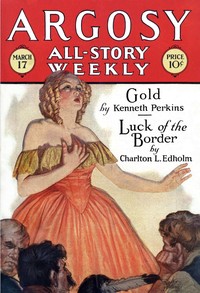
The source record for Prize of the air — A Closer Reading measures this digital text at 10,388 words, 46 min estimated reading time, and 1 detected text section.
The text analysis averages about 16.6 words per sentence, while the detected sections provide another way to judge how the source is divided.
Project Gutenberg metadata also associates the work with “Short stories,” connecting these edition facts with the source record’s subject description.
Explore this collection
These alternatives are selected using recorded categories and estimated reading time.
About 37 minutes
Classic Adventures
8,375 recorded words. 9 minutes difference from this book's estimate.
View Gutenberg source #32527About 85 minutes
Classic Adventures
19,454 recorded words. 39 minutes difference from this book's estimate.
View Gutenberg source #71780About 87 minutes
Classic Adventures
19,862 recorded words. 41 minutes difference from this book's estimate.
View Gutenberg source #24091Search stored excerpts and compare books → Choose by your preferences →
Choices use stored catalog measurements. Estimates vary with reading speed. A shared category is a catalog label, not a claim that two books have the same argument or literary quality.
Search reads excerpt text stored with this catalog and links to its associated Gutenberg record. The connection is stored in the site database; this tool does not recheck that every excerpt is word-for-word identical to that external record. Excerpt search does not cover every chapter and does not verify historical publication dates.
Catalog snapshot checked: 2026-09-26. Coverage: 100 public books, 100 available source excerpts.
Calculated from edition completeness, EPUB availability, text structure and catalogue metadata. Not a user rating.
Total of 100 points, scaled to a 2.5-5.0 range. Editions with an empty description or a missing EPUB file are not scored.
Public-domain source text
The source text is kept in the dedicated reader, separate from this catalogue record and its commentary.
Bill Barlow opens the story by looping a plane at two thousand feet with a paying passenger—an illegal stunt that costs him his license. The field superintendent calls him out, but Bill’s grin and candid admission that he needed the five hundred dollars reveal a pilot who treats rules as flexible. The passenger, Saxton, responds not with anger but by offering a job flying him to New Mexico. This opening establishes a pattern: Bill’s charm and skill get him into trouble, then out of it, as the narrative moves from a grounded conflict to an airborne adventure.
The excerpts rely heavily on dialogue to define personalities. Bill Barlow speaks in a breezy, self-deprecating tone: “You’re hitting me right where I live,” he says when Saxton’s offer tempts him. The field superintendent’s clipped, official language—“You know as well as I do that it’s against the law”—contrasts with Bill’s easygoing replies. Later, the bandit Pedro Cesar uses a thickly accented English (“Por Dios! If they want to doubla cross me”) that marks him as a distinct voice. The exchanges are brisk, often humorous, and drive the plot forward without lengthy description.
Saxton, the passenger, is more than a fare. He finances the trip, owns the plane, and later insists on joining Bill in a dangerous mission: “What’s the matter with me? Am I a cripple?” His presence shifts the dynamic from solo pilot to reluctant team. The plane itself is a practical tool—Bill lands with a dead engine, uses bombs from a wrecked ship, and notes the need for a getaway aircraft. The story treats aviation as a job, not a spectacle, with details like throttling the motor and banking left grounding the action in real piloting.
Bill’s interrogation of Pedro Cesar is a masterclass in bluffing. He invents a story about captured bandits turning state’s evidence, and Pedro falls for it, revealing the gold’s location and the involvement of a bandit chief named Pancho Lopez. The deception is cheerful—“Bill lied cheerfully”—and effective. But trust remains conditional: Bill orders Saxton to watch Cesar during the flight. The narrative keeps loyalties fluid, with Pedro’s cooperation motivated by self-interest rather than conversion. This cat-and-mouse game adds tension beyond the aerial combat.
The climactic action scene is concise and tactical. Bill spots a sky-blue monoplane warming up, drops two bombs from the wrecked gray ship, and tips the enemy plane over. He then spirals down to target a machine gun, taking fire before landing at the far end of the field. The description is lean: “Bill throttled his motor and swung to the right, then circled and made a landing.” The focus is on decisions—which bomb to use, where to land—rather than on emotional reactions. This practical, step-by-step approach keeps the action grounded in the mechanics of flight.
Readers should pay attention to how quickly the story shifts from a license revocation to a gold heist. The excerpts cover only the first half of the narrative, so the resolution of the bandit plot and Bill’s eventual fate remain unknown. The tone is consistently light, even during violence, suggesting a preference for adventure over realism. Treat the dialogue as the primary engine of the story, and note how every character, from the superintendent to Pedro, speaks in a way that reveals their role in Bill’s world.
There’s something in Bill Barlow’s stubborn resourcefulness that always reminds me of another old friend. Both wander into danger not for glory, but because a quiet code pushes them forward. I’ve spent years watching these two find their way through gold and grit. Their kinship feels like a warm shelf kept just for them. Tarzan and the city of gold — Themes and Context holds that same weathered honesty, I think.
A brief reflection can help important ideas stay with you longer.