About 306 minutes
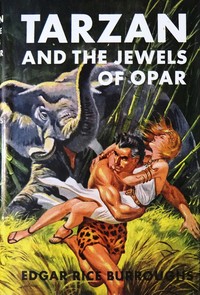
Tarzan and the Jewels of Opar — Inside the Classic
Classic Adventures
70,378 recorded words. 0 minutes difference from this book's estimate.
View Gutenberg source #92
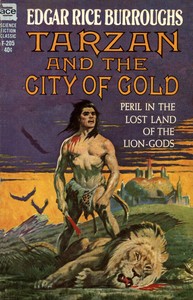
Tarzan and the city of gold — Themes and Context can be approached with a clearer sense of reading commitment from its source measurements: 70,318 words, 5 hr 6 min estimated reading time, and 20 detected text sections.
The text analysis averages about 17.3 words per sentence, while the detected sections provide another way to judge how the source is divided.
Project Gutenberg metadata also associates the work with “Tarzan (Fictitious character) -- Fiction,” connecting these edition facts with the source record’s subject description.
Explore this collection
These alternatives are selected using recorded categories and estimated reading time.
About 306 minutes
Classic Adventures
70,378 recorded words. 0 minutes difference from this book's estimate.
View Gutenberg source #92About 308 minutes
Classic Adventures
70,701 recorded words. 2 minutes difference from this book's estimate.
View Gutenberg source #65459About 303 minutes
Classic Adventures
69,534 recorded words. 3 minutes difference from this book's estimate.
View Gutenberg source #25316Search stored excerpts and compare books → Choose by your preferences →
Choices use stored catalog measurements. Estimates vary with reading speed. A shared category is a catalog label, not a claim that two books have the same argument or literary quality.
Search reads excerpt text stored with this catalog and links to its associated Gutenberg record. The connection is stored in the site database; this tool does not recheck that every excerpt is word-for-word identical to that external record. Excerpt search does not cover every chapter and does not verify historical publication dates.
Catalog snapshot checked: 2026-09-26. Coverage: 100 public books, 100 available source excerpts.
Calculated from edition completeness, EPUB availability, text structure and catalogue metadata. Not a user rating.
Total of 100 points, scaled to a 2.5-5.0 range. Editions with an empty description or a missing EPUB file are not scored.
Public-domain source text
The source text is kept in the dedicated reader, separate from this catalogue record and its commentary.
Tarzan and the City of Gold opens with the ape-man venturing into the unmapped backlands of ancient Abyssinia, drawn by mystery rather than a specific quest. The narrative quickly immerses him in the walled city of Cathne, a forgotten kingdom where lions are not wild beasts but domesticated assets—racing, hunting, and war animals owned by nobles and the queen. The excerpts show a society that disposes of its dead by feeding them to lions, a practice treated as ordinary and even honorable. This editorial note examines how the catalog subjects—fantasy, adventure, and Tarzan fiction—align with the actual text, focusing on the peculiar integration of lions into Cathne's civic and religious life.
The excerpts depict Cathne as a city where lions are woven into the fabric of daily existence. Gemnon, a native, explains that the queen keeps three hundred full-grown males for war, and that lions are bred in a dedicated facility outside the city. The streets are patrolled by tame lions that occasionally kill and eat citizens—but only those already dead, as the corpse of a naked man being devoured is described as having died before the lion got him. This detail is not presented as shocking; Gemnon laughs and notes that pedestrians simply step aside. The lions must eat, and human flesh is a routine part of their diet when available. The text treats this arrangement as a matter of civic management, not horror, which distinguishes it from typical adventure-fantasy settings where wild animals are antagonists. Here, lions are infrastructure: they dispose of the dead, serve in war, and are even raced for sport. The catalog subject "Adventure stories" fits, but the excerpts suggest a more systematic worldbuilding than the generic label implies.
The religious dimension of Cathne's lion culture is explicit. Gemnon states, "You see, our god is a lion." This is not a metaphor; the city's deity is literally a lion, and the practice of feeding corpses to lions is tied to this belief. Being devoured by a lion is considered no disgrace but rather the contrary. The excerpts also mention Xarator, a place where diseased bodies are buried and where those who can afford a funeral cortege may also be interred—though many choose to be thrown to lions by preference. This detail reveals a stratified afterlife: the poor and the pious (in lion terms) are eaten; the wealthy or diseased are buried. The catalog subject "Fantasy fiction" is broad, but the excerpts ground the fantasy in a specific, coherent theology that governs death and social status. The lion god is not a distant figure but an active consumer of the city's dead, and the queen's war lions are an extension of that divine power.
Despite the catalog subject "Tarzan (Fictitious character) -- Fiction," the excerpts show Tarzan in a largely passive role. He is led through the city by Gemnon, asking questions and observing customs. His only active moment is a reference to his having overthrown the strongest man in Cathne, but the excerpts do not describe that event. Instead, the narrative focuses on the city's strangeness: the stone-flagged streets, the grilled gateways, the social hierarchy visible in the shrinking houses and grounds as they walk from the noble quarter to the artisan district. Tarzan's famous physical prowess is backgrounded; his curiosity and adaptability are foregrounded. The catalog subject implies action-driven plot, but the excerpts emphasize world-exploration and cultural exposition. This suggests that the book may balance Tarzan's iconic role with a more ethnographic mode of storytelling, where the setting itself is the primary source of interest.
Readers approaching this work expecting a straightforward jungle adventure will find instead a detailed portrait of a lion-centric civilization. The excerpts reward attention to how Burroughs builds a society around a single animal—its breeding, its use in war and hunting, its role in disposal of the dead, and its elevation to godhood. Tarzan's perspective provides an outsider's lens, but the city of Cathne, with its golden walls and lion-filled streets, is the true subject. The catalog subjects are accurate but incomplete; the text offers a richer, more peculiar world than the labels suggest.
I remember how the war lions of Cathne paced those golden streets, their hunger a strange, formal thing. It put me in mind of another sort of service, years later, when the soldier boys’ needs felt just as absolute. Both worlds ask for a giving over of self. There is a quieter kind of kinship in The Outdoor Girls in Army Service; Or, Doing Their Bit for the Soldier Boys — Edition Insights, a gentler echoing of that same devotion.
Create a short personal record of your experience with this book.