About 164 minutes
In the Wonderful Land of Hez; or, The Mystery of the Fountain of Youth — Reading Companion
Classic Adventures
37,583 recorded words. 4 minutes difference from this book's estimate.
View Gutenberg source #50654
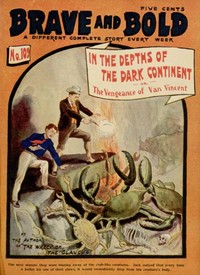
The source record for In the Depths of the Dark Continent; or, The Vengeance of Van Vincent — Background and Themes measures this digital text at 36,705 words, 2 hr 40 min estimated reading time, and 4 detected text sections.
The text analysis averages about 17.2 words per sentence, while the detected sections provide another way to judge how the source is divided.
Project Gutenberg metadata also associates the work with “Revenge -- Fiction,” connecting these edition facts with the source record’s subject description.
Explore this collection
These alternatives are selected using recorded categories and estimated reading time.
About 164 minutes
Classic Adventures
37,583 recorded words. 4 minutes difference from this book's estimate.
View Gutenberg source #50654About 153 minutes
Classic Adventures
34,982 recorded words. 7 minutes difference from this book's estimate.
View Gutenberg source #5602About 151 minutes
Classic Adventures
34,713 recorded words. 9 minutes difference from this book's estimate.
View Gutenberg source #65833Search stored excerpts and compare books → Choose by your preferences →
Choices use stored catalog measurements. Estimates vary with reading speed. A shared category is a catalog label, not a claim that two books have the same argument or literary quality.
Search reads excerpt text stored with this catalog and links to its associated Gutenberg record. The connection is stored in the site database; this tool does not recheck that every excerpt is word-for-word identical to that external record. Excerpt search does not cover every chapter and does not verify historical publication dates.
Catalog snapshot checked: 2026-09-26. Coverage: 100 public books, 100 available source excerpts.
Calculated from edition completeness, EPUB availability, text structure and catalogue metadata. Not a user rating.
Total of 100 points, scaled to a 2.5-5.0 range. Editions with an empty description or a missing EPUB file are not scored.
Public-domain source text
The source text is kept in the dedicated reader, separate from this catalogue record and its commentary.
The story opens with a murder under a midnight storm in the village of Edgewater, establishing a pattern of violent, atmospheric set pieces. Van Vincent, an eighteen-year-old orphan raised by a wealthy but frugal uncle, is thrust into a quest that quickly moves from a domestic crime scene to the Congo River. The narrative relies on abrupt transitions—a chase, a kidnapping, and a voyage—rather than psychological depth, typical of the dime novel format.
The excerpts reveal a fondness for perilous underground settings: slimy passages, a tomb of bones and skulls, and a cave where a giant crab drags a victim. These environments are rendered with sensory details—extinguished torches, echoing gunshots, and chattering teeth—that heighten the suspense. The author, Cornelius Shea, prioritizes action over character interiority, using dialogue to propel the plot forward.
The excerpts repeatedly place characters in confined, dark spaces. In Chapter I, the stormy night is described with “inky pall” and a “perfect hurricane,” but the real danger shifts indoors with the murder. Later, the party descends into a “slimy and damp” passage where lizards crawl, and they slide down a decline into a tomb “filled with piles of bones and grinning skulls.” The most striking threat is the giant crab in Chapter XIV, which drags Joe across a cave floor. Shea uses these settings to generate physical jeopardy: torches go out, matches are scarce, and characters rely on revolver shots to signal each other. The crab’s claws are described as “something awful to look upon,” and a bullet to the eye only stuns it, leaving a “furious thrashing” in the dark. These sequences emphasize survival through quick reflexes and teamwork rather than planning.
The dialogue is marked by exclamations and colloquial speech. Characters frequently utter “Thunder!” or “Ugh!” to express surprise or disgust. Lank Edwards uses the vernacular “terbacky” for tobacco, and Dr. Pestle speaks in a formal but excitable tone. The professor’s teeth chatter, and his lines are often faltering: “Suppose the little fiends have killed our two companions, what then?” This contrast between the professor’s fear and Van’s steady resolve—“I agree with you!”—creates a clear hierarchy of composure. The dialogue also serves to convey information: characters announce their actions (“I’ll fire off my revolver”) and shout names (“Jack!”) to maintain contact. The repeated use of “our hero” in the narration distances the reader slightly, reinforcing the formulaic style of the dime novel.
The chapter titles telegraph the story’s episodic nature: “Murder!,” “A Plucky Chase,” “Carried to Sea,” “A Woman’s Paradise,” “The Dwarfs,” “A Horrible Fate.” Each title promises a discrete adventure, and the excerpts show that chapters often end on a note of suspense. For instance, Chapter XIV ends with Jack unsure if he has killed the crab, as the match goes out and the creature thrashes. The narrative moves rapidly from one peril to the next, with little reflection. The table of contents lists twenty-four chapters, suggesting a packed plot involving Amazons, dwarfs, a band of horsemen, a remarkable discovery, and a Utopia. The pacing is breathless, with characters rarely pausing to rest. This structure suits the serial format, where each installment must hook the reader for the next week’s issue.
Readers should note that the excerpts cover only the opening and a middle chapter, so the full arc of Van’s vengeance and the resolution of the lost-father plot remain unknown. The story’s reliance on coincidences and sudden rescues is typical of the genre. Pay attention to how Shea balances the exotic African settings—Congo River, Amazons, dwarfs—with the familiar dime-novel tropes of captivity and escape. The giant crab and the tomb of bones are memorable set pieces that showcase the author’s willingness to blend natural history with Gothic horror.
I remember hiding under the porch light with a flashlight, that same thrill of a jungle closing in around me. Van Vincent’s lonely hunt felt like my own secret. Years later, a damp copy of The Fire Flower — Themes and Context gave me that identical shiver, the world softening into a story I could hold tight and never quite put down.
A brief reflection can help important ideas stay with you longer.