About 458 minutes
The Five Arrows — A Closer Reading
Classic Adventures
105,204 recorded words. 8 minutes difference from this book's estimate.
View Gutenberg source #35904
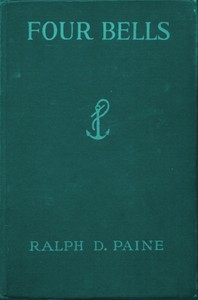
Before opening Four Bells: A Tale of the Caribbean — Background and Themes, the edition data offers a quick orientation: 106,965 words, 7 hr 46 min estimated reading time, and 12 detected text sections.
The text analysis averages about 12.9 words per sentence, while the detected sections provide another way to judge how the source is divided.
Project Gutenberg metadata also associates the work with “Adventure stories,” connecting these edition facts with the source record’s subject description.
Explore this collection
These alternatives are selected using recorded categories and estimated reading time.
About 458 minutes
Classic Adventures
105,204 recorded words. 8 minutes difference from this book's estimate.
View Gutenberg source #35904About 485 minutes
Classic Adventures
111,368 recorded words. 19 minutes difference from this book's estimate.
View Gutenberg source #14284About 485 minutes
Classic Adventures
111,509 recorded words. 19 minutes difference from this book's estimate.
View Gutenberg source #29617Search stored excerpts and compare books → Choose by your preferences →
Choices use stored catalog measurements. Estimates vary with reading speed. A shared category is a catalog label, not a claim that two books have the same argument or literary quality.
Search reads excerpt text stored with this catalog and links to its associated Gutenberg record. The connection is stored in the site database; this tool does not recheck that every excerpt is word-for-word identical to that external record. Excerpt search does not cover every chapter and does not verify historical publication dates.
Catalog snapshot checked: 2026-09-26. Coverage: 100 public books, 100 available source excerpts.
Calculated from edition completeness, EPUB availability, text structure and catalogue metadata. Not a user rating.
Total of 100 points, scaled to a 2.5-5.0 range. Editions with an empty description or a missing EPUB file are not scored.
Public-domain source text
The source text is kept in the dedicated reader, separate from this catalogue record and its commentary.
The novel opens with a blunt dismissal of maritime romance: 'The romance of the sea! Damned rubbish, he called it.' This sets the tone for a story that initially grounds itself in the gritty realities of post-war merchant shipping, where Richard Cary's career is shaped by 'the hard schooling of North Atlantic voyages in bull-nosed brutes of war-built freighters.' The narrative voice is wry and world-weary, contrasting sharply with the later, more theatrical Caribbean episodes.
Paine's prose shifts register as Cary moves from the mundane to the mysterious. The early chapters are dense with technical detail and ironic commentary on the decline of American shipping, but once the action moves to Cartagena, the language becomes more colorful and dramatic, with characters speaking in exaggerated, almost theatrical dialogue. This change in pace and voice is a key feature of the novel's structure.
The first chapter establishes a cynical, almost journalistic tone. The narrator describes the 'painful malady of deflation' that afflicted post-war commerce and the 'bull-nosed brutes' of freighters. Richard Cary is introduced as a competent but unromantic figure, a product of 'the hard schooling of North Atlantic voyages.' The language is precise and slightly detached, focusing on economic and professional realities.
As the story progresses into the Caribbean setting, the prose becomes more vivid and action-oriented. The description of the ship leaving port—'Safely she avoided the shoals and made the wide circuit to swing into the narrow fairway of the Boca Chica between the mouldering, grass-grown forts'—employs a more cinematic, almost romantic vocabulary. The dialogue also shifts: Mr. Duff's gruff 'Hell's bells, young man, we'll show 'em who runs this ship' contrasts with the earlier, more restrained exchanges. This change in register mirrors Cary's own transformation from a disillusioned officer to a figure of adventure, nicknamed 'Tigre Amarillo.'
Paine uses dialogue to define character and drive the plot. Richard Cary speaks with a calm, measured authority that contrasts with the bluster of Mr. Bradley Duff, the 'beach-comber' chief officer. Cary's apology—'I apologize. It was unfair of me. I snapped it out before I thought'—reveals a man who can admit fault while maintaining control. Duff's response, with its 'swag-bellied' physique and 'bleary eye,' is rendered through his rough, defensive speech: 'You bent a gun over my crust last night, and I'm willing to forget that, which is very handsome of me.'
The crew's reaction to Cary's appearance on the bridge is telling: 'They happened to descry the figure of a very tall and broad young man with a thatch of yellow hair that shone in the sun like spun gold.' This description, filtered through the crew's perspective, elevates Cary to a near-mythic status. The dialogue that follows—'The young man could be none other than the dreaded Tigre Amarillo'—shows how reputation and rumor shape the narrative. Paine uses these vocal contrasts to build tension and establish the hierarchy aboard the ship.
The excerpt from later in the novel demonstrates a marked acceleration in pacing. The scene moves from Cary's solitary watch on the bridge to a tense confrontation with the crew. The short, punchy sentences—'Not a soul moved on deck'—create a sense of stillness before action. The dialogue becomes rapid and confrontational: 'And so you boxed up the crew, Captain Cary? That is a new one on me.'
Paine controls tempo by alternating between Cary's internal reflections and external action. Cary's thought—'Now ees what?'—is a moment of private humor, immediately interrupted by Duff's 'rumbling cough.' The physical description of Duff 'clinging to a stanchion with one hand' adds a note of comic relief. The release of the crew is handled with swift, brutal efficiency: 'Mr. Duff's fist smote the first one under the chin. The others took the hint.' This compression of time and action contrasts with the earlier, more leisurely exposition, showing Paine's ability to shift gears from detailed setup to rapid-fire resolution.
Readers should pay attention to how Paine uses the sea itself as a narrative device: the ship's movement from harbor to open water marks a transition from the constraints of law and society to a more lawless, adventurous space. The recurring motif of the 'Tigre Amarillo'—the yellow tiger—hints at a transformation that is as much about perception as action. The novel rewards attention to its shifts in tone, from the sardonic opening to the swashbuckling climax, and to the way characters' voices reveal their hidden motives and histories.
There’s something about Richard Cary’s restless gold-hair—that Tigre Amarillo—that stays with you long after the last page, the way late sun lingers on quiet water. I keep thinking how that same restless spark glows in another story, Son of Power — Reading Companion, though its shade runs deeper and older. It felt like meeting an old friend’s distant cousin. A gentle echo.
Capture what you thought, learned, and would like to remember.