About 218 minutes
The Circus Boys on the Mississippi; Or, Afloat with the Big Show on the Big River — Background and Themes
Classic Adventures
50,092 recorded words. 1 minutes difference from this book's estimate.
View Gutenberg source #2477
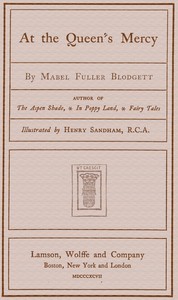
This digital edition of At the Queen's Mercy — A Reader’s Guide is described by source-level measurements including 50,235 words, 3 hr 39 min estimated reading time, and 24 detected text sections.
The text analysis averages about 20.4 words per sentence, while the detected sections provide another way to judge how the source is divided.
Project Gutenberg metadata also associates the work with “Africa -- Fiction,” connecting these edition facts with the source record’s subject description.
Explore this collection
These alternatives are selected using recorded categories and estimated reading time.
About 218 minutes
Classic Adventures
50,092 recorded words. 1 minutes difference from this book's estimate.
View Gutenberg source #2477About 225 minutes
Classic Adventures
51,682 recorded words. 6 minutes difference from this book's estimate.
View Gutenberg source #2475About 226 minutes
Classic Adventures
51,943 recorded words. 7 minutes difference from this book's estimate.
View Gutenberg source #2476Search stored excerpts and compare books → Choose by your preferences →
Choices use stored catalog measurements. Estimates vary with reading speed. A shared category is a catalog label, not a claim that two books have the same argument or literary quality.
Search reads excerpt text stored with this catalog and links to its associated Gutenberg record. The connection is stored in the site database; this tool does not recheck that every excerpt is word-for-word identical to that external record. Excerpt search does not cover every chapter and does not verify historical publication dates.
Catalog snapshot checked: 2026-09-26. Coverage: 100 public books, 100 available source excerpts.
Calculated from edition completeness, EPUB availability, text structure and catalogue metadata. Not a user rating.
Total of 100 points, scaled to a 2.5-5.0 range. Editions with an empty description or a missing EPUB file are not scored.
Public-domain source text
The source text is kept in the dedicated reader, separate from this catalogue record and its commentary.
The narrator of At the Queen's Mercy introduces himself as a plain man, one who prefers action to writing, yet feels compelled to record the sights that have branded his memory. This opening establishes a voice that is direct, self-deprecating, and grounded—a contrast to the fantastical events that follow. The story begins with a stormy evening and a fireside conversation, but soon the narrative veers into a world of witches, stone gods, and a queen whose beauty is likened to a poisonous flower. The reader is warned early that this is a tale strange beyond common reckoning, and the narrator insists on his own lack of invention, a claim that becomes increasingly ironic as the plot unfolds.
The narrator's self-description as a plain man is more than a rhetorical gesture; it shapes the entire texture of the prose. He uses short, declarative sentences and avoids elaborate metaphors, even when describing the supernatural. For instance, the red witch is introduced with precise, almost clinical details: she is a bent figure, hardly larger than a child, perfectly bald, with a face a mass of wrinkles and skin drawn tight over the bones. This matter-of-fact observation makes the subsequent horror more striking. The narrator's voice remains steady even as he recounts visions of vapor figures whirling in an evil dance, and he explicitly states that he stopped his ears as a Christian man, refusing to listen to the witch's foul mouthings. This blend of plain speech and moral certainty creates a tension between the ordinary and the extraordinary, grounding the fantasy in a recognizable human perspective.
The red witch's song is a key structural element, and its rhythm is carefully rendered. The narrator describes a monotonous beating on a hollow log with tanned skins stretched across the ends, and the song itself has no melody but a kind of rhythm that stirs the listener to frenzy. The lyrics are presented in a series of parallel declarations: 'I am Hubla the witch, and I hold in my palm the lives of men. Blood shall flow that I may not thirst; and the white dove shall flutter in the net at my command.' The repetition of 'I am' and 'Come' creates a hypnotic cadence that mirrors the drum beats. The narrator notes that the blue smoke from the cauldron takes on form and substance, imaging what she sang, so that the words become visible. This fusion of sound, rhythm, and visual hallucination marks a shift from the earlier plain style into a more incantatory mode, suggesting that the narrative itself is being reshaped by the forces it describes.
The opening chapter moves from a calm, domestic setting—two men by a fire on a stormy evening—to a scene of intense supernatural terror. The transition is abrupt: the narrator is brought to the red witch's lair, and the prose accelerates as the witch's actions become more frenzied. The description of the witch lifting a heavy stone image 'lightly as though lifting a feather' defies physical logic, signaling a break from realism. The pace quickens further as the witch throws powder into the cauldron, producing a thin blue vapor, and begins her song. The sentences become shorter, and the narrator's reactions shift from observation to visceral fear: 'I could not turn my eyes away, and my heart was as water in my breast.' This acceleration is then cut short by the narrator's decision to stop his ears, a deliberate act of resistance that reasserts his plain, moral voice. The chapter ends with the vision passing, but the reader is left with the sense that the narrative pace will continue to oscillate between the mundane and the hallucinatory.
Readers should pay attention to how the narrator's plain style serves as a counterweight to the fantastical elements. The story's credibility depends on his insistence that he is not given to embroidering facts, yet the visions he describes grow increasingly vivid. The rhythm of the prose—sometimes blunt, sometimes incantatory—offers a clue to the narrator's psychological state. The witch's song, with its repetitive structure, may foreshadow other patterns of recurrence in the plot. Approach the text as a record of a mind struggling to contain the extraordinary within the limits of ordinary language.
Sometimes a story lingers not for its plot but for its pulse—the drumbeat under At the Queen’s Mercy reminded me of another feverish landscape, where rivers promised youth and nothing was quite solid. I found myself thinking of In the Wonderful Land of Hez; or, The Mystery of the Fountain of Youth — Reading Companion, whose own mirages shimmer with that same uneasy wonder, half dream, half warning.
A brief reflection can help important ideas stay with you longer.