1

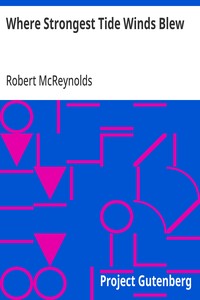
Where Strongest Tide Winds Blew — Themes and Context
(7 User reviews)
1577
Project Gutenberg
2009
Adventure stories
Readers of public-domain and historical texts
Project Gutenberg digital edition
en
Edition facts
Words: 45,293
Reading time: 197 min
Text sections: 6
Source:
Project Gutenberg record #30128
This editorial note examines how the opening, middle, and later excerpts of Robert McReynolds's adventure story guide a first reading, focusing on the shift from Colorado mining to Peruvian revolution and the narrator's evolving role.
The opening excerpt situates the narrator in a Colorado cabin built high on the Sangre de Christo range, overlooking the San Luis Valley. The description emphasizes the wild, solitary setting—a towering cliff, a crystal spring, a tunnel blasted into the mountain. The narrator speaks of imbibing “a portion of the divine essence” from the vast solitudes, establishing a tone of rugged individualism and reverence for nature. This initial scene, however, is only a prelude; the table of contents reveals that the story quickly moves to sea voyages and South American revolution. A first reader should note how the opening’s concrete details—the cabin, the tunnel, the mountain—anchor the narrator’s identity before the narrative shifts dramatically to Peru.
From Colorado Cabin to Peruvian Rails
The middle excerpt, from chapter XVI, finds the narrator in Mollendo, Peru, sitting on the balcony of the British consulate. He is now called “Don Juan” and is recovering from wounds sustained in a revolution. The earlier Colorado setting has been replaced by the Pacific coast, cathedral bells, and a procession of chained prisoners. The narrator’s voice remains direct and personal, but his circumstances have changed entirely: he is an engineer involved in the conflict, protected by the British flag. The shift is abrupt; the excerpts do not explain how he traveled from Colorado to Peru or how he became embroiled in Pierola’s uprising. A first reader should be prepared for a narrative that jumps between locations and roles, with the narrator’s past in mining giving way to a present of war and diplomacy.
The Narrator as Witness and Participant
Throughout the excerpts, the narrator is both observer and actor. In the opening, he describes the landscape with a painter’s eye, noting “gaunt, fantastic shadows in cañon and deep ravine.” In the later excerpt, he recounts being wounded, carried from a train, and greeted by cries of “Viva Juancita!” The tone is matter-of-fact, even when describing his own bloodied appearance. He notes that the general manager’s eyes were “full of tears,” but he does not dwell on his own emotions. This restraint suggests a narrator who reports events without self-dramatization. A first reader should watch for how the narrator’s understated style contrasts with the violent and chaotic events he describes—a technique that lends credibility to his account.
Recurring Motifs: Wounds, Flags, and Loyalty
Two motifs recur across the excerpts: physical wounds and symbols of protection. The narrator suffers a head wound and a broken arm, and his recovery is a thread in the later pages. The British flag appears as a refuge: “Safe from the assassin’s knife … I felt a certain refuge beneath the ensign of my country.” Manuel, his companion, asks if the flag protects him too. These details hint at a world where personal safety depends on political allegiance and national identity. The narrator’s loyalty to the existing government is clear—he is cheered in Arequipa—but the excerpts also show him avoiding the sight of prisoners, suggesting discomfort with the cost of victory. A first reader might track how the narrator’s body and his allegiances are tested throughout the story.
The Unseen Framework: Revolution and Romance
The excerpts provide only fragments of the plot. The table of contents lists chapters with titles like “Fairest Flower of the Cordilleras” and “The Masque Ball at Tiravaya,” indicating a romantic subplot. The dedication mentions “the romantic story” of John B. Stephen and his wife as the source of principal incidents. Yet the excerpts themselves contain no love scenes; they focus on engineering, battle, and survival. A first reader should not expect a conventional romance. Instead, the narrative seems to weave personal adventure with historical events, possibly drawing on the author’s own experiences (McReynolds wrote “Thirty Years on the Frontier”). The gaps in the excerpts—how the narrator came to Peru, what happened to Felicita, the fate of Don Rodrigo Garcia—are invitations to read the full text.
These excerpts reveal a story that moves between two worlds: the American frontier and the Peruvian revolution. The narrator’s voice remains steady, but his circumstances shift dramatically. A first reader should pay attention to the way McReynolds uses concrete details—a cabin, a train, a flag—to ground the narrative, and how the narrator’s understated tone contrasts with the violence around him. The gaps in the excerpts are not flaws but prompts; the full book likely fills in the connections between Colorado and Peru, between mining and warfare, between the narrator’s past and his present.
Leo Rivera
1 month agoThere are no comments for this eBook.
Reader reflection
Your personal reading reflection
Build a private reading journal entry for this title.
Your progress
0
/
10
2
What was your overall reaction to the book?
3
Is this a title you would suggest to others?
4
What was the reading difficulty like?
5
Would a second reading be valuable?
6
Did it raise ideas you would like to talk about?
7
How strongly did the book affect you emotionally?
8
How did the pace of the book feel?
9
What changed or sharpened your thinking?
10








Henry Taylor
4 weeks ago