About 506 minutes
Long Live the King! — Inside the Classic
Classic Adventures
116,188 recorded words. 8 minutes difference from this book's estimate.
View Gutenberg source #2714
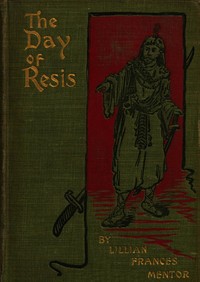
The Day of Resis — Themes and Context can be approached with a clearer sense of reading commitment from its source measurements: 118,057 words, 8 hr 34 min estimated reading time, and 64 detected text sections.
The text analysis averages about 20.4 words per sentence, while the detected sections provide another way to judge how the source is divided.
Project Gutenberg metadata also associates the work with “Adventure stories,” connecting these edition facts with the source record’s subject description.
Explore this collection
These alternatives are selected using recorded categories and estimated reading time.
About 506 minutes
Classic Adventures
116,188 recorded words. 8 minutes difference from this book's estimate.
View Gutenberg source #2714About 505 minutes
Classic Adventures
115,938 recorded words. 9 minutes difference from this book's estimate.
View Gutenberg source #28440About 499 minutes
Classic Adventures
114,599 recorded words. 15 minutes difference from this book's estimate.
View Gutenberg source #17856Search stored excerpts and compare books → Choose by your preferences →
Choices use stored catalog measurements. Estimates vary with reading speed. A shared category is a catalog label, not a claim that two books have the same argument or literary quality.
Search reads excerpt text stored with this catalog and links to its associated Gutenberg record. The connection is stored in the site database; this tool does not recheck that every excerpt is word-for-word identical to that external record. Excerpt search does not cover every chapter and does not verify historical publication dates.
Catalog snapshot checked: 2026-09-26. Coverage: 100 public books, 100 available source excerpts.
Calculated from edition completeness, EPUB availability, text structure and catalogue metadata. Not a user rating.
Total of 100 points, scaled to a 2.5-5.0 range. Editions with an empty description or a missing EPUB file are not scored.
Public-domain source text
The source text is kept in the dedicated reader, separate from this catalogue record and its commentary.
The novel opens with a letter and a strange manuscript, immediately establishing a frame narrative that propels the characters into the African interior. The author, Lillian Frances Mentor, uses a documentary style—presenting the document as a found object—to lend credibility to the extraordinary events that follow. This choice in structure signals that the story will balance rational inquiry with the fantastical.
Mentor's prose is direct and action-oriented, favoring concrete details over abstraction. Descriptions of the underground caverns emphasize sensory experience: the wind's force, the darkness, and the shocking sight of preserved bodies with "grinning at them with open mouths and sightless eyes." The language is efficient, moving the narrative swiftly from one peril to the next.
The narrative begins not with action but with a letter, a device that grounds the adventure in a recognizable reality. Miss Cameron receives a document from a hunter who encountered an Abyssinian named Sedai, who in turn found a mysterious manuscript. This layered transmission—letter within a letter—creates a sense of authenticity and mystery. Mentor does not linger on the document's contents; instead, she uses it as a springboard into the journey. The choice to open with correspondence rather than direct exposition reflects a late-nineteenth-century fascination with travel narratives and the idea of hidden knowledge waiting to be uncovered. The reader is positioned as a fellow decipherer, invited to piece together the clues alongside the characters.
In the cavern of the dead, Mentor's descriptive choices are particularly striking. The explorers encounter thousands of preserved bodies, their skin "drawn tightly over the bones" and "shining like ebony." The author specifies that the bodies are nude except for copper bands, and that their limbs remain pliable—details that defy scientific explanation and heighten the uncanny atmosphere. The dialogue that follows, where characters debate the bodies' origin, serves to articulate the mystery without resolving it. Onrai's suggestion that this might be "the great death hole" introduces local mythology, while Mr. Bruce's rational response grounds the scene in empirical observation. Mentor balances the grotesque with the analytical, never letting the horror overwhelm the narrative momentum.
Mentor uses dialogue to convey information and define character. Mr. Bruce, the leader, speaks in measured, explanatory tones: "These are dead and they know no suffering." Onrai, the native guide, responds with puzzlement and cultural references, his voice distinct from the Americans. The exchanges are functional, advancing the plot while revealing attitudes. The author avoids lengthy monologues; instead, characters react to their environment in short, urgent sentences. This technique keeps the pace brisk and the focus on the immediate situation. When Mr. Bruce drops the torch in shock, the action is described simply, without melodrama. The restraint in the prose makes the horror more effective, as the reader is left to imagine the full scene from the sparse but vivid details.
The chapter titles offer a roadmap of the novel's structure, revealing a pattern of discovery, peril, and escape. Early titles like "The Strange Document" and "Into the Heart of Africa" give way to "In the Cavern" and "Death Faces Them." Later chapters cluster around imprisonment and survival: "Prisoners in the Cavern of the Dead," "The Death-Trap," "Buried Alive." The final chapters build toward "The Day of Resis," the title event. This progression suggests a narrative that alternates between exploration and crisis, with the underground setting dominating the middle section. The titles are functional, promising action without spoiling outcomes. Mentor's structural choices emphasize the physical challenges of the journey, with the caverns serving as both setting and antagonist.
Readers should attend to how Mentor uses the underground environment to test her characters' resourcefulness and resolve. The caverns are not merely backdrops but active spaces that shape the plot through their physical constraints—darkness, wind, narrow passages. The author's attention to sensory detail, from the feel of the rock to the sight of the preserved bodies, creates a palpable atmosphere. The novel rewards those who appreciate adventure fiction grounded in concrete observation rather than psychological depth.
There’s something about that hidden city’s damp, echoing corridors that lingers, a feeling of being both lost and found. Reading it, I remembered the quieter, sun-drenched awe of another journey, in The Golden Hope: A Story of the Time of King Alexander the Great — Reading Notes. Both leave that particular ache—the one for places we’ll never truly see.
Create a short personal record of your experience with this book.