About 235 minutes
Daughters of Destiny — Story, Setting & Ideas
Classic Adventures
54,039 recorded words. 3 minutes difference from this book's estimate.
View Gutenberg source #54540
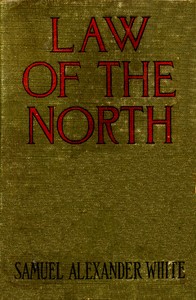
Before opening Law of the North (Originally published as Empery) A Story of Love and Battle in Rupert's Land — Key Ideas to Explore, the edition data offers a quick orientation: 54,518 words, 3 hr 58 min estimated reading time, and 6 detected text sections.
The text analysis averages about 12.2 words per sentence, while the detected sections provide another way to judge how the source is divided.
Project Gutenberg metadata also associates the work with “Canada -- Fiction,” connecting these edition facts with the source record’s subject description.
Explore this collection
These alternatives are selected using recorded categories and estimated reading time.
About 235 minutes
Classic Adventures
54,039 recorded words. 3 minutes difference from this book's estimate.
View Gutenberg source #54540About 234 minutes
Classic Adventures
53,812 recorded words. 4 minutes difference from this book's estimate.
View Gutenberg source #2474About 226 minutes
Classic Adventures
51,943 recorded words. 12 minutes difference from this book's estimate.
View Gutenberg source #2476Search stored excerpts and compare books → Choose by your preferences →
Choices use stored catalog measurements. Estimates vary with reading speed. A shared category is a catalog label, not a claim that two books have the same argument or literary quality.
Search reads excerpt text stored with this catalog and links to its associated Gutenberg record. The connection is stored in the site database; this tool does not recheck that every excerpt is word-for-word identical to that external record. Excerpt search does not cover every chapter and does not verify historical publication dates.
Catalog snapshot checked: 2026-09-26. Coverage: 100 public books, 100 available source excerpts.
Calculated from edition completeness, EPUB availability, text structure and catalogue metadata. Not a user rating.
Total of 100 points, scaled to a 2.5-5.0 range. Editions with an empty description or a missing EPUB file are not scored.
Public-domain source text
The source text is kept in the dedicated reader, separate from this catalogue record and its commentary.
The opening of Law of the North (originally Empery) establishes a distinctive narrative voice that blends precise physical description with an undercurrent of tension. The courier Basil Dreaulond, hearing men on the Nisgowan portage, reacts with a trained, almost mechanical alertness: he hides his canoe, pack, and himself, then makes ready his weapons. The prose is economical, favoring concrete actions over internal commentary, and the setting—boulder-strewn woodland, tamarack thicket, blazed passage—is rendered with a surveyor's eye for detail. This opening suggests a world where survival depends on acute sensory awareness and swift, silent decisions.
The first chapter's pacing is deliberate, matching the physical effort of the portage. White uses short, declarative sentences to convey Dreaulond's movements: "He stopped automatically and trained his hearing in mechanical analysis of the sound." The narrative then slows to describe the hiding of the canoe and the creation of a peep-hole among "pungent boughs." This alternation between action and observation creates a rhythm that mirrors the courier's cautious advance. The arrival of the Nor'westers is deferred, building anticipation through the detailed scrutiny of the path—"flinty rock fragments, spear-like stumps, and a chaotic jumble of logs." The voice remains detached, reporting sensory data rather than emotion, which heightens the sense of professional competence under threat.
Later in the text, the narrative voice shifts when Maskwa, the Ojibway fort runner, takes the lead. His speech is terse and observant: "I made the shoes," he says of snowshoe tracks, identifying them by the curve of the knots. The dialogue between Maskwa and Chief Trader Dunvegan is clipped, with Maskwa's responses carrying an ironic edge—"The Little Fool is glad to meet with the Company's servants," he remarks after capturing Gaspard Follet. This section demonstrates how White varies pace through dialogue: the tracking scene is methodical, with pauses for examination of the snow pattern, while the capture is abrupt, with Maskwa dragging Follet from the bushes. The narrative voice here is lean, letting the characters' actions and sparse words carry the tension.
A notable shift in rhythm occurs when Baptiste Verenne sings a French folk song during the march: "Te souvient-il de cette amie, Douce compagne de ma vie?" The lines, quoted in full, introduce a lyrical pause into the otherwise grim journey through Nor'west country. The song contrasts with the sailor's gruff "Bucko! Bucko!" and Terence's frown, creating a moment of cultural texture and emotional respite. White uses this interlude to vary the narrative tempo—after the song, the prose returns to "desolate grayness" and the strict lookout. This technique suggests that the author is deliberately controlling pace not only through action and dialogue but also through embedded verse, which momentarily lifts the story out of its immediate peril and into a broader, more reflective register.
Readers attentive to narrative craft will notice how White orchestrates tension through sentence length, dialogue density, and the strategic placement of song. The story rewards those who watch for shifts in rhythm—from the staccato of a portage to the measured tracking of snowshoe prints to the unexpected lyricism of a voyageur's refrain. These variations give the prose a texture that complements the rugged setting.
I remember the portage in Law of the North—how the rhythm of paddles and that faint French song carried a whole landscape. It reminded me of a summer spent trailing behind a rickety wagon in The Circus Boys on the Plains; Or, The Young Advance Agents Ahead of the Show — A Closer Reading, where every dusty mile felt like its own quiet story, unhurried and strange.
Capture what you thought, learned, and would like to remember.