About 309 minutes
Hidden Country — A Reader’s Guide
Classic Adventures
70,841 recorded words. 3 minutes difference from this book's estimate.
View Gutenberg source #66215
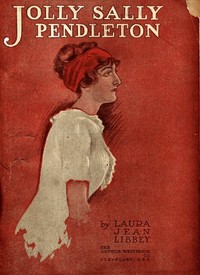
Before opening Jolly Sally Pendleton; Or, the Wife Who Was Not a Wife — Context and Discussion, the edition data offers a quick orientation: 71,670 words, 5 hr 12 min estimated reading time, and 8 detected text sections.
The text analysis averages about 16.1 words per sentence, while the detected sections provide another way to judge how the source is divided.
Project Gutenberg metadata also associates the work with “Love stories,” connecting these edition facts with the source record’s subject description.
Explore this collection
These alternatives are selected using recorded categories and estimated reading time.
About 309 minutes
Classic Adventures
70,841 recorded words. 3 minutes difference from this book's estimate.
View Gutenberg source #66215About 308 minutes
Classic Adventures
70,701 recorded words. 4 minutes difference from this book's estimate.
View Gutenberg source #65459About 317 minutes
Classic Adventures
72,772 recorded words. 5 minutes difference from this book's estimate.
View Gutenberg source #70536Search stored excerpts and compare books → Choose by your preferences →
Choices use stored catalog measurements. Estimates vary with reading speed. A shared category is a catalog label, not a claim that two books have the same argument or literary quality.
Search reads excerpt text stored with this catalog and links to its associated Gutenberg record. The connection is stored in the site database; this tool does not recheck that every excerpt is word-for-word identical to that external record. Excerpt search does not cover every chapter and does not verify historical publication dates.
Catalog snapshot checked: 2026-09-26. Coverage: 100 public books, 100 available source excerpts.
Calculated from edition completeness, EPUB availability, text structure and catalogue metadata. Not a user rating.
Total of 100 points, scaled to a 2.5-5.0 range. Editions with an empty description or a missing EPUB file are not scored.
Public-domain source text
The source text is kept in the dedicated reader, separate from this catalogue record and its commentary.
From its first sentence, Laura Jean Libbey's Jolly Sally Pendleton; Or, the Wife Who Was Not a Wife announces a world of spectacle and nicknames: two stunningly pretty girls on a tandem bicycle, dubbed "the Heavenly Twins" by onlookers. The novel, published in 1897 as part of the Hart Series, immediately signals its dime-novel DNA—bold chapter headings, a breathless pace, and a fascination with appearances. Yet beneath the surface of this romantic adventure lies a persistent tension between what is seen and what is true, a pattern that recurs in the excerpts through contrasts of wealth and poverty, sincerity and deception, and the fragile line between wife and not-wife.
The opening chapter introduces Jay Gardiner, a handsome millionaire heir, driving his "prancing bays" through a village where every maiden turns to look. But the real spectacle is the tandem bicycle ridden by Sally Pendleton and another girl, whose "odd, bewitching costumes" earn them a public nickname. The bicycle—a modern, daring vehicle for women in the 1890s—becomes a symbol of visibility and risk. Later, a "terrible wager at the great race" (Chapter III) suggests that the novel uses public contests to test character and fortune. The excerpts do not reveal the race's outcome, but the pattern is clear: characters are constantly performing for an audience, and their worth is measured by how they are seen. This emphasis on spectacle raises questions about authenticity in a world where a pretty face and a flashy costume can earn a nickname, but not necessarily trust.
In a later excerpt, Bernardine—a young wife abandoned by her husband—finds herself in a boardinghouse room with a stranger named Margery Brown. Exhausted, Bernardine falls asleep by the window, watching for her husband. Margery, claiming a "strange gift" of mesmerism, makes passes over Bernardine's closed eyelids until she is "sound enough." Then she steals Bernardine's wallet, which contains "all the years of toil" her husband had saved. The scene is striking for its clinical detail: the slow, pendulum-like hand movements, the careful testing of sleep depth, and the theft executed with "cat-like" stealth. Bernardine's innocent belief that she is married—"It is not mine; it is my husband's"—contrasts sharply with Margery's cynical exploitation. The episode underscores a recurring vulnerability: women in this novel are preyed upon when they are most trusting and most asleep, both literally and metaphorically.
The novel's subtitle, The Wife Who Was Not a Wife, points to a legal or emotional limbo that the excerpts only partially clarify. Bernardine insists she is married, but her companion's internal thought—"Could it be that she was simple enough to believe that the man who had deserted her so cruelly had married her?"—suggests doubt. The title character, Sally Pendleton, is introduced as "jolly" and carefree, yet the narrative's structure (with chapters like "Shall We Break This Betrothal, That Was Made Only in Fun?") implies that marriages and betrothals may be casual wagers or performances. The dime novel genre often traffics in bigamy, false marriages, and mistaken identities, and Libbey's work appears to follow that tradition. The excerpts do not resolve whether Bernardine's marriage is legal or a sham, but they consistently frame marriage as something fragile, contested, and subject to interpretation—a status that can be claimed, denied, or stolen like a wallet.
Readers approaching Jolly Sally Pendleton should attend to the novel's rapid shifts in setting and fortune, and to the way characters' names and nicknames signal their roles. The excerpts offer only fragments of a larger plot involving races, desertions, and thefts, but they consistently reward attention to small details—a hand gesture, a piece of clothing, a phrase repeated. Libbey's prose moves quickly, but the tensions it builds around trust, visibility, and the meaning of marriage are worth pausing over.
That afternoon, the rain drummed a gentle monotone against the windows while I followed Jolly Sally’s reckless zigzag between borrowed bicycles and borrowed identities, marveling at how easily a stolen wallet could upend a life built on charm. Her story unsettled me into thinking about how fragile our public masks are, and I drifted to the shelf, pulling down Long Live the King! — Inside the Classic almost without deciding to, seeking another quiet fiction of royalty’s precarious grip.
Your answers remain private and are stored only in this browser.