About 411 minutes
Under the Andes — Story, Setting & Ideas
Exploration
94,383 recorded words. 6 minutes difference from this book's estimate.
View Gutenberg source #546
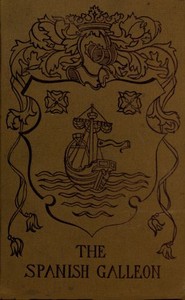
This digital edition of The Spanish Galleon Being an account of a search for sunken treasure in the Caribbean Sea. — Background and Themes is described by source-level measurements including 95,864 words, 6 hr 57 min estimated reading time, and 8 detected text sections.
The text analysis averages about 24.2 words per sentence, while the detected sections provide another way to judge how the source is divided.
Project Gutenberg metadata also associates the work with “Shipwreck survival -- Fiction,” connecting these edition facts with the source record’s subject description.
Explore this collection
These alternatives are selected using recorded categories and estimated reading time.
About 411 minutes
Exploration
94,383 recorded words. 6 minutes difference from this book's estimate.
View Gutenberg source #546About 374 minutes
Exploration
85,915 recorded words. 43 minutes difference from this book's estimate.
View Gutenberg source #25159About 328 minutes
Exploration
75,256 recorded words. 89 minutes difference from this book's estimate.
View Gutenberg source #20084Search stored excerpts and compare books → Choose by your preferences →
Choices use stored catalog measurements. Estimates vary with reading speed. A shared category is a catalog label, not a claim that two books have the same argument or literary quality.
Search reads excerpt text stored with this catalog and links to its associated Gutenberg record. The connection is stored in the site database; this tool does not recheck that every excerpt is word-for-word identical to that external record. Excerpt search does not cover every chapter and does not verify historical publication dates.
Catalog snapshot checked: 2026-09-26. Coverage: 100 public books, 100 available source excerpts.
Calculated from edition completeness, EPUB availability, text structure and catalogue metadata. Not a user rating.
Total of 100 points, scaled to a 2.5-5.0 range. Editions with an empty description or a missing EPUB file are not scored.
Public-domain source text
The source text is kept in the dedicated reader, separate from this catalogue record and its commentary.
The narrator introduces himself as William Morgan, a lineal descendant of the buccaneer Henry Morgan, and immediately frames his ordeal as evidence of “hereditary tendencies.” This genealogical self-consciousness colors the entire account: the search for treasure is both a practical struggle and a legacy. The opening scene—floating on a corded chest after a squall—is rendered with clinical specificity: latitude 15° N, longitude 62° W, the chest “partly filled with water,” the muscles aching, the wolf of hunger gnawing. Seeley does not rush the shipwreck; he dwells on the repetitive motion of pushing the chest, the chafed hands, the delirious dreams. The island is sighted, the tide is turning, and the prose forces the reader to feel each incremental gain toward the beach.
Morgan’s opening confession—that he mentions his lineage “in no spirit of pride, quite the contrary”—establishes a narrator who is both self-aware and slightly defensive. He invites readers to “trace in these adventures evidence of hereditary tendencies,” yet the narrative that follows is dominated not by swashbuckling instinct but by methodical problem-solving: rationing food, building shelter, making bread. The tension between inherited reputation and individual action runs beneath the surface. Seeley uses the first-person to create intimacy without sentimentality; Morgan reports his own exhaustion and fear in blunt, physical terms—“my eyes were on fire”—rather than with emotional elaboration. This voice gives the survival details a documentary weight, as if the narrator is testifying rather than storytelling.
When Morgan discovers the old plantation, Seeley shifts from action to observation. The description is dense with botanical and agricultural specifics: orange trees “at least fifty years old,” mandarins with “skin loose and thin as paper,” coffee-trees, limes, lemons, grapefruit, banana and plantain leaves. The narrator reads the landscape like a detective, noting the “decided evidence of the hand of man” in the regular rows, then the weeds and undergrowth that signal abandonment. The buildings are itemized—adobe dwelling, servants’ quarters, sugar shed with heaps of “old bagasse,” tobacco-curing shed with “shreds and fragments of withered tobacco.” Inside, the dust, cobwebs, water stains, dead leaves that blew through a broken pane are counted as evidence of time elapsed. Seeley lets the details accumulate without commentary, trusting the reader to infer the story of decline.
The chapter titles themselves—The Food Supply, House-Building, Boat-Building, Bread-Making—signal that this is a narrative of making and doing. Morgan’s survival depends on his ability to improvise with found materials, and Seeley lingers on the processes: how to construct a water-glass, how to grind grain, how to build a boat. The prose mirrors the repetitive labor it describes. When Morgan pushes the chest through the water, the sentence structure becomes iterative: “Still on, on, on, compelling the unwilling and rebellious muscles to their automatic work, made sickening to the very soul by long continued repetition.” The rhythm of the language enacts the monotony of the task. This attention to craft extends to the treasure hunt itself, which is less a romantic quest than a technical problem of locating a wreck on the seafloor.
Despite the title, the Spanish galleon does not appear in the excerpts as a romantic emblem. It is a physical target, located through the water-glass and approached with the same methodical care Morgan applies to building a house or making bread. Seeley’s interest lies in the mechanics of discovery—how to see through water, how to salvage, how to bring treasure to the surface—rather than in the treasure’s symbolic weight. The narrator’s buccaneer ancestry might promise swashbuckling, but the prose delivers a survival manual with a plot. This tension between expectation and execution is the book’s quietest strength: the adventure is real, but it is rendered in the language of a shipwright or a farmer, not a pirate.
Readers should approach The Spanish Galleon as a hybrid: part castaway narrative in the tradition of Defoe, part technical manual for tropical survival. Seeley’s prose rewards attention to small details—the way a broken windowpane becomes a calendar of dead leaves, the way a character’s lineage is offered as both explanation and apology. The book is less concerned with treasure than with the labor required to reach it, and its most memorable passages are those in which the narrator’s hands are sore and his mind is fixed on the next practical step.
I keep thinking about the voice in The Spanish Galleon — how that narrator’s quiet familiarity with ruin makes the solitude feel almost like a hand on your shoulder. It’s the same warmth I found reading Through the Desert — Inside the Classic, where endurance becomes less about glory and more about learning what silence holds. Strange, the company old pages give us.
A brief reflection can help important ideas stay with you longer.